Publication 'Green on the Balance Sheet' aims to ensure green is taken into account |
|
|
|
|
 |
| 210 sec |
Koninklijke VHG seeks to make the value of green visible in financial decisions
Tom Bade, director of Triple E, wrote the publication Green on the Balance Sheet on behalf of Stichting De Groene Stad and under the direction of Koninklijke VHG. It aims to ensure that the value of green space is better considered in decision-making on the built environment. According to Koninklijke VHG director Marc van Rosmalen, in practice there is often a lack of solid substantiation when choices are made about design and investment.
This article was previously published on April 6, 2026 on the website of Stad + Groen.
| Tom Bade - Photographer Anton Logeman |
'Everyone feels that green is important. But when decisions or priorities are set for public space or area development, there is often no clear, testable and financially translatable substantiation.' With Green on the Balance Sheet, Koninklijke VHG aims to change that: 'From conviction to substantiated value.' According to Van Rosmalen, this is necessary because more and more objectives come together in urban areas. 'There is increasing pressure on limited space: reducing heat stress and flooding, while promoting biodiversity and health.' The benefits of green space do not automatically end up with those who invest. 'These benefits do not naturally appear in the budgets and decision frameworks of governments, developers and managers.'
|
|
'We no longer want to work based on conviction, but on substantiated value'
| |
|
Green as an asset on the balance sheet
A key principle is that green space should no longer be seen solely as a cost item. 'Green should also be recognised for its added value on the balance sheet in financial terms.' Van Rosmalen compares green space to infrastructure: 'A bridge is financially listed on the balance sheet and has an annual budget. But a tree increases in value over time, because it grows.' Proper management is essential. 'At the opening of a park, an alderman cuts a ribbon, but after that the park requires maintenance and becomes a cost item.' By linking value to green space, he says, an incentive is created to maintain quality, similar to real estate.
More than an accounting issue
According to Van Rosmalen, it is not only about numbers, but also about a different way of thinking. 'It is a technical accounting issue, but also a cultural one.' Green is often seen as organic and soft, while concrete and buildings are perceived as hard and easy to calculate. 'The aim is to ensure that green counts in the same language of planning, budgeting and accountability.' This is also important in the context of nature restoration and climate adaptation.
|
|
'The point is that green should count in the same language of planning, budgeting and accountability'
| |
|
First signals from practice
According to Van Rosmalen, initial responses are positive. 'We see that municipalities, housing corporations and developers are increasingly discussing green space as an asset.' Some housing corporations already explicitly include green space on their balance sheets because it increases property value. 'Our members notice that it helps them shift projects from a wish to a necessity.' Ultimately, Green on the Balance Sheet aims to contribute to better decision-making in policy, programming and financing.
Towards a real economy and new ownership
Author Bade emphasises that the choice for a book format was deliberate. 'A book has a different status than a report. You read the full story, including the substantiation. When figures are embedded in a narrative, they come to life.' According to him, the calculations are scientifically substantiated and transparently explained. At the same time, he raises concerns about how the economic valuation of green space is often used. He distinguishes between societal benefits and real economic income. 'In cost-benefit analyses, many effects are expressed in monetary terms, but that is not real money. There is no actual economic transaction behind it.' Bade believes this has partly stalled the discussion. 'We have started to believe that fictional benefits are real benefits.' He points to examples where large healthcare savings are calculated without clarity on how that money becomes available for green space. 'An alderman does not need billions, but a few hundred thousand euros for concrete management. You need to create a link for that.'
|
|
'If the national government needs to invest in new recreational areas, you have to speak that language'
| |
|
Micro and macro
Bade distinguishes between macro-economic arguments and local revenue models. For large-scale challenges, such as recreational areas around cities, he sees a role for macro-economic substantiation. 'If the national government needs to invest in new recreational areas, you have to speak that language.' At the same time, he advocates more attention to small-scale arrangements at neighbourhood level. He points to structures in which stakeholders become co-owners or managers of green space, for example through associations or foundations. 'That green space must remain public, but it can be managed by those who benefit from it most. That creates involvement and real value.' According to him, this is also key to sustainable management. The current system of short-term tenders and focus on lowest price leads to limited ownership. 'These are fleeting transactions. If you treat someone as temporary, that is reflected in the work.' He advocates long-term partnerships in which landscapers are seen as partners, also due to the increasing technical and professional complexity of the work.
|
|
'The alternative is dystopian'
| |
|
More than just inner-city green
Bade broadens the discussion to the overall spatial challenge. 'In the 1970s and 1980s, housing development went hand in hand with the creation of large recreational areas. Now the focus is mainly on housing numbers.' According to him, existing nature and recreational areas are under pressure. This calls for new investments and a broader view of liveability. 'The alternative is dystopian.'
Human scale
The final chapters focus on the human scale. In addition to climate adaptation and biodiversity, social cohesion and use are also key. 'We need to reinvent ownership. Not everything can or should be managed by government.' New financial arrangements, for example around guided walking programmes or local management structures, can create targeted financial flows that directly support maintenance. 'That is real economy. Real money, real work and real engagement.' With Green on the Balance Sheet, Bade aims not only to present figures, but also to provide direction. 'It is more than just numbers. It is about moving forward.'
|
|
'We need to reinvent ownership; not everything can or should be managed by government'
| |
|
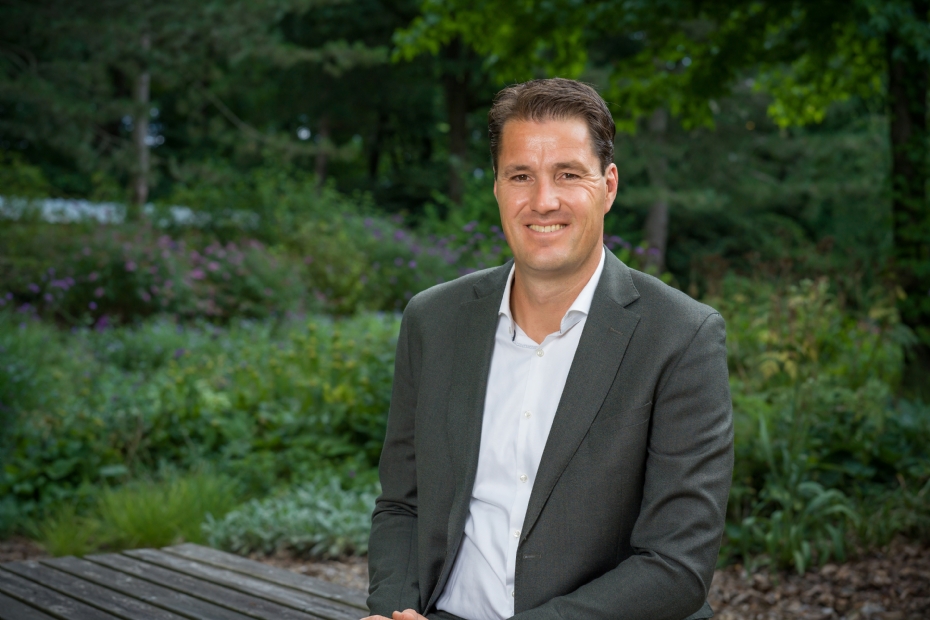 | | Marc van Rosmalen - Image Studio Pothoff |
|
|
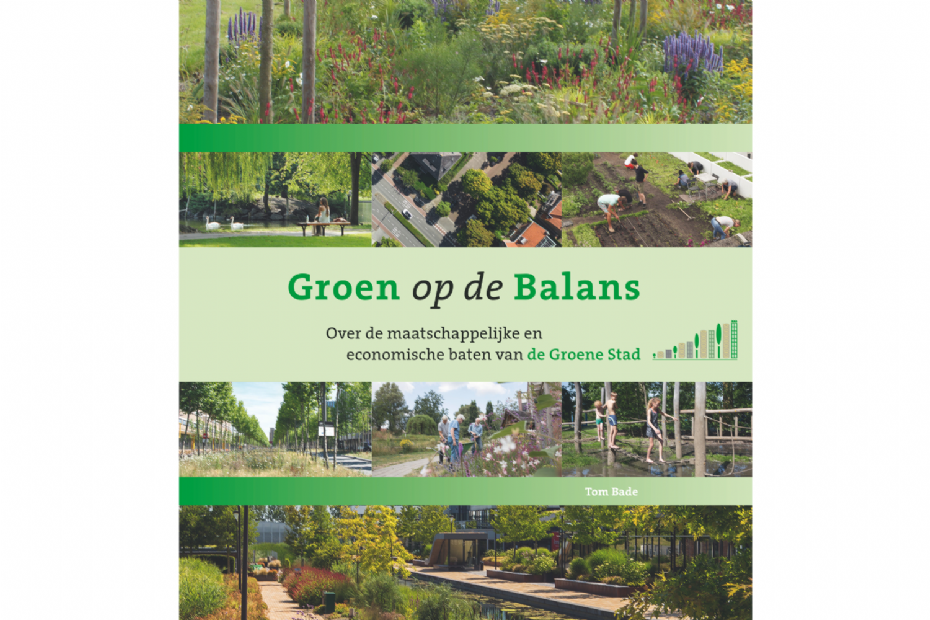 | | Cover 'Green on the Balance Sheet' |
|
|
| Triple E - Economy, Ecolo... | |
| |
| LOG IN
with your email address to respond.
|
|
|
| There are no comments yet. |
|
| |
Anyone can place small ads for free through their own account.
Place a free ad
|
|
|
|