ESTC webinar on infill: new standard should provide guidance in the transition to polymer-free artificial turf systems |
|
|
|
|
 |
| 240 sec |
The phase-out of polymeric infill is putting pressure on the artificial turf sector to come up with new solutions quickly. During the webinar Infill under the microscope: a guide to EN 15330-5, trade association ESTC explained the new European standard for infill materials in sports fields.
| Nonfill artificial turf from TenCate |
The main message of the webinar was easy to summarise: the market is changing rapidly, but clients, managers and sports organisations need clear frameworks to assess materials properly.
Hot topic
ESTC chairman Stefan Diderich opened the webinar by noting that infill has become an increasingly important topic in recent years, not only from a sports technical perspective, but also because of regulation and environmental concerns. Due to the announced ban on polymeric infills from October 2031 in the European Union, attention is shifting to alternatives. These include organic infills such as cork, mineral solutions and nonfill systems, where playing characteristics mainly come from the fibre construction. In this webinar, the focus was explicitly on infill materials and their standardisation.
|
|
The familiar standard solution is disappearing, while the number of alternatives is growing
| |
|
 | | Stefan Diderich ESTC |
|
|
UEFA perspective
On behalf of UEFA, stadium and pitch specialist Lee Guerriero explained why artificial turf, and with it the quality of infill, is a relevant issue for European football. According to him, artificial turf now plays a role at all levels of European football: from grassroots and youth tournaments to club competitions at a high level. He pointed out that UEFA has long used quality assurance in its competition regulations through FIFA quality standards. That certification must remain valid throughout the tournament.
#PStefan Diderich ESTC
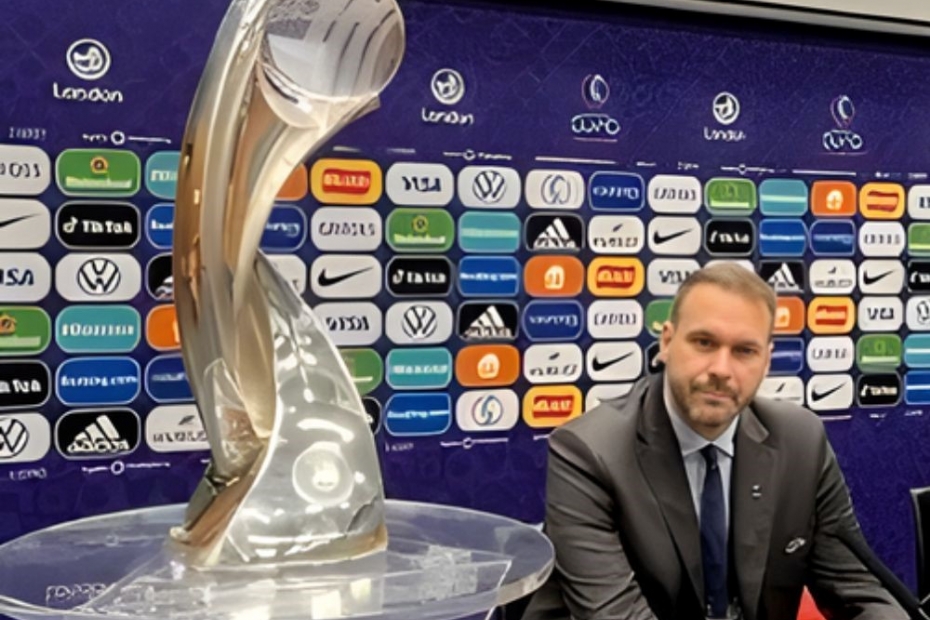 | | Lee Guerriero (UEFA) |
|
|
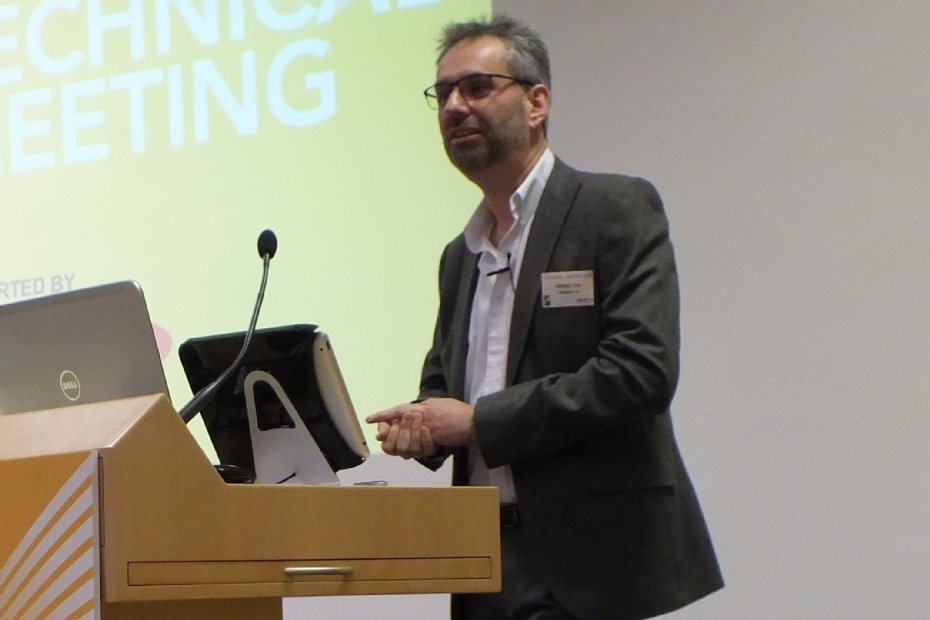 | | Alastair Cox |
|
|
Broad use
Guerriero made it clear that artificial turf is no longer a side issue for UEFA. According to him, it is also used in top competitions, especially in climate zones where natural grass is not sufficiently playable. Guerriero mentioned several examples in which artificial turf has made an important contribution to the sporting development of clubs. He also referred to youth matches that can still go ahead in winter conditions thanks to artificial turf.
Practical value
UEFA also used this to underline the broader social value of artificial turf: more playing hours, greater availability of facilities and more opportunities for sports development in regions with severe weather conditions or limited infrastructure. At the same time, Guerriero acknowledged that the microplastics restriction will have major consequences, especially for countries where artificial turf is an important part of football infrastructure. UEFA has therefore set up a separate working group with national associations that make extensive use of artificial turf.
|
|
For clients, choosing the wrong infill is not a minor detail, but a costly mistake
| |
|
New standard
After this broader context, ESTC technical director Alastair Cox discussed the new European standard EN 15330-5. He explained that infill has historically played a key role in artificial turf systems. For years, the situation was straightforward: many systems used polymeric infill, mainly because these materials offered good playing characteristics, durability and reliable installation. That situation is now changing rapidly.
Environmental pressure
According to Cox, the European Commission has identified polymeric infills as a major source of intentionally added microplastics. He referred to the large amounts of granulate present on fields and the loss to the surrounding environment. According to him, this development has triggered a wave of innovation: more and more alternative infills are entering the market, while systems without infill are also gaining ground.
Why standardisation
Precisely because the range of products is growing quickly, the need for a uniform assessment method has increased. After all, choosing the wrong material can be a costly mistake when installing an artificial turf field. That market problem led to the decision to develop a European standard. The process started around 2020. After consultation and revisions, the standard was published in September last year and has since had to be implemented as a national standard in all participating countries.
European basis
Cox emphasised that European standards are intended to support free trade and a level playing field within the internal market. A product tested according to the standard should in principle be assessed in the same way in all participating countries. For the artificial turf sector, this means that standards now exist, or are being developed, not only for the overall sports technical performance of a system, but also for separate components such as shockpads, yarns and infill.
|
|
The standard does not say which infill is best, but it does define how materials can be compared fairly
| |
|
What becomes measurable
According to Cox, the core of EN 15330-5 is that the standard sets minimum requirements and assessment methods for infill materials. This concerns not only the composition and physical properties of the material, but also production consistency, durability and suitability for different climate conditions. The standard therefore does not prescribe which infill is "best", but makes it possible to test products in a comparable and transparent way.
Test framework
Craig Melrose of Sports Labs then went into more detail about the test methods. His main message was that the standard does not designate a preferred material, but offers an objective test framework. That framework should help replace marketing claims with measurable properties. For example, particle size distribution is assessed because it affects compaction, drainage and the behaviour of the top layer. The shape of the particles is also evaluated, because it is linked to wear, stability and interaction with players. In addition, loose bulk density is measured, among other things to assess processability and moisture absorption.
Behaviour under climate conditions
Other important parts of the standard are water absorption and buoyancy. These are relevant for regions with high rainfall or frost, because some lightweight materials may float or behave differently in wet and cold conditions. The elasticity of the infill is also tested. This property partly determines how much shock absorption comes from the infill itself and how much must therefore be expected from the shockpad or construction.
The standard also includes tests for water infiltration, mechanical durability, temperature build-up under radiation, freeze-thaw resistance and dust formation. Melrose said the latter is especially important for the safety of players and maintenance staff. Chemical and toxicological tests are also carried out, including on leaching and on substances considered undesirable from a health or environmental perspective.
Not a simple tick-box
Not all results are presented as a simple "pass" or "fail". In part, the standard works with classifications. This applies, for example, to elasticity and durability. The service life of some plant-based or organic infills appears to vary considerably. That is exactly why users need to be able to read the test results properly and translate them into practical application.
First guidance
The conclusion of the webinar was clear: the sector is entering a period in which the familiar standard solution is disappearing and freedom of choice is actually increasing. That makes independent assessment more important. EN 15330-5 now provides a technical framework for comparing infills on performance, safety and behaviour under different conditions. For field managers, designers and clients, this does not yet provide a ready-made answer, but it does offer more guidance in a rapidly changing market.
|
For managers and clients, EN 15330-5 is not yet the final answer, but it is a useful starting point
| |
|
This article was previously published on 13 April 2026 on the Fieldmanager](https://www.fieldmanager.nl/article/53653/estc-webinar-over-infill-nieuwe-norm-moet-houvast-geven-in-de-overgang-naar-polymeervrije-kunstgrassystemen]Fieldmanager) website.
| ESTC (the EMEA Synthetic ... | |
| |
| LOG IN
with your email address to respond.
|
|
|
| There are no comments yet. |
|
| |
Anyone can place small ads for free through their own account.
Place a free ad
|
|
|
|





