Bol.com-style approach should give landscapers more control over plant purchasing |
|
|
|
|
 |
| 305 sec |
Fons van Wezel (Plant Market): 'We tell growers: just grow something you are good at, and become even better at it'
The plant trade has traditionally been organised in the same way: a tree nursery grows plants, sells them to a trader, who then sells them on with a margin to a landscaper, retailer or cash & carry business. Director-owner Fons van Wezel of Plant Market sees that model changing. In his view, the starting point is no longer the trader, but data and logistics. Comparable to the systems used by Bol.com and Amazon.
| Fons van Wezel, Plant Market |
Van Wezel outlines a model in which traditional trading moves into the background, while data, logistics and platform technology become more important. His company no longer wants to serve growers and buyers as a trading house, but as a link connecting demand, supply and distribution. 'Trading is valuable, but also expensive. Salespeople spend all day preparing quotations and maintaining contacts. That may no longer fit the times. A well-structured webshop can do this more efficiently, faster and at lower cost.'
|
|
Trading is valuable, but also expensive. Salespeople spend all day preparing quotations and maintaining contacts.
| |
|
Digitalisation
This idea did not appear overnight. Van Wezel worked in the trade for many years and recognised early on that much of the work in the chain revolved around information, pricing and logistics management. SAP Holland, acquired by Van Wezel and his business partner in 2018, therefore focused on digitalisation at an early stage. For growers, the key question is what such a model changes. According to Van Wezel, the added value lies in transparency and reach. Through the platform, growers can access a much larger market without having to build a complete sales and logistics organisation themselves. Plant Market works with stock data, plant characteristics, photographs, pricing structures and logistics routes. This should enable buyers to find what they are looking for more quickly, while making growers more visible in the market. Van Wezel: 'As a grower, you do not become an anonymous number in our webshop. That is not in our interest. We want growers to build their own brand identity, so customers specifically search for your plants because they know they represent quality.'
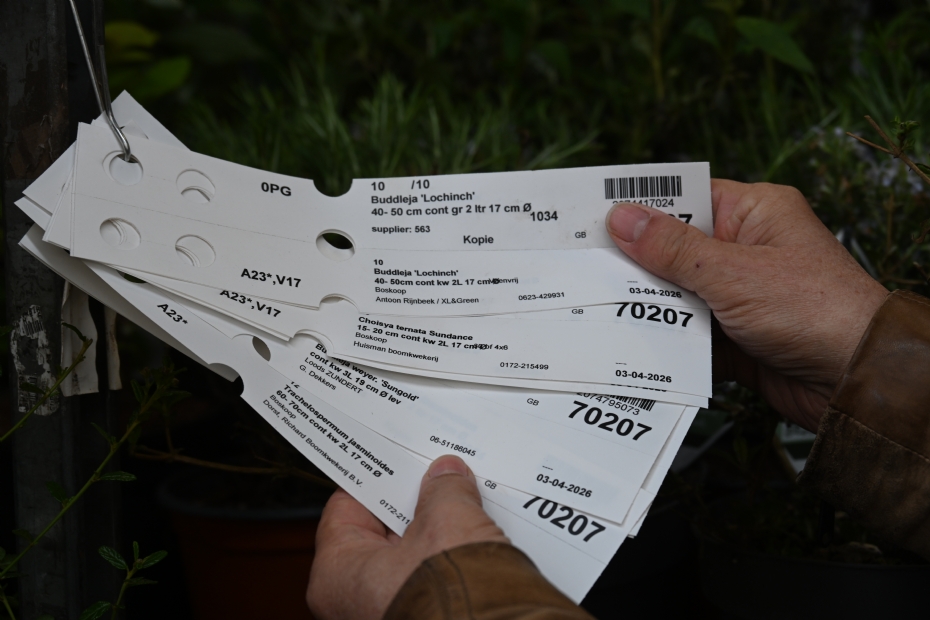 | | Every pallet is provided with a double set of labels |
|
|
|
|
Just grow something you are good at, and become even better at it.
| |
|
'Just grow something you are good at and become even better at it' is essentially Van Wezel's message. The platform should then ensure that those plants reach the right customer. In the early days, Van Wezel sometimes heard concerns that his platform would lead to price erosion. According to him, practice has shown the opposite: 'Buyers do not choose the cheapest product, but sellers who offer the right quality at a fair average price.' That may sound somewhat vague, but it became clear ten minutes later while walking through the warehouse with Van Wezel in search of a suitable location for photographs. We passed a pallet of Taxus plants, at which both Van Wezel and the warehouse manager reacted with a hesitant 'Hmm'. They then continued walking, adding: 'This may not be a triple-A product, but for some locations, some customers and some gardens, this is simply more than good enough.'
Trade channel
This also changes the role of the traditional trader. The trader will not disappear, but the added value is under pressure. Van Wezel: 'Traditional trading involves a lot of manual work: preparing quotations, making calls, sending emails and checking availability. Much of that work can be replaced by data and automation.' According to him, traders benefit from keeping buyers as dependent as possible on the trader, with only the seller possessing the market knowledge needed to connect supply and demand. Van Wezel: 'In my opinion, that no longer fits today's market. We believe our added value lies in organising logistics. We even show customers the names of growers.' Within Plant Market, extensive product data, pricing models and logistics calculations are used. Transport costs, pallet quantities and plant origin are automatically included in pricing structures. Tasks that were once handled with calculators and experience are now largely embedded in systems.
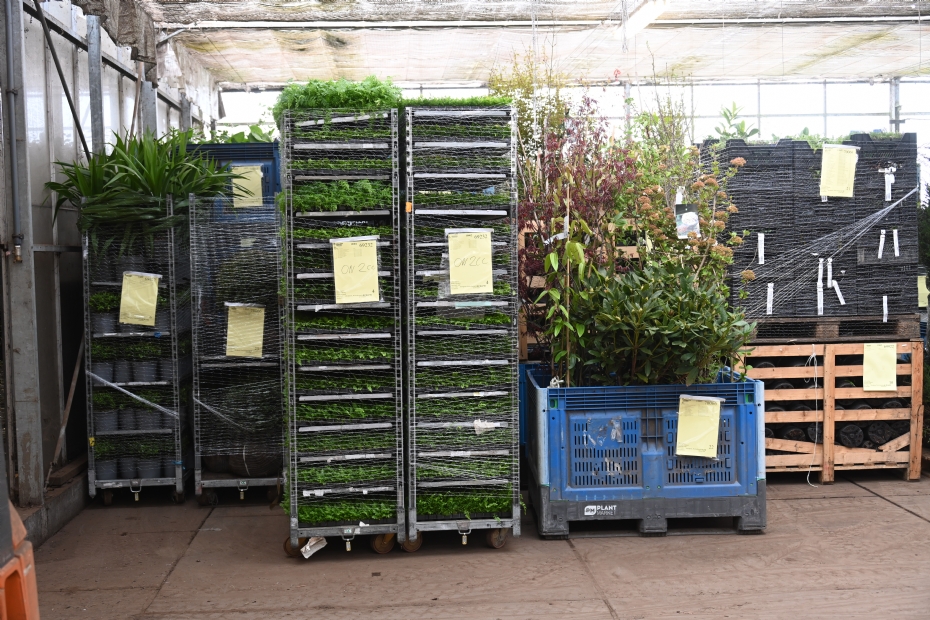 | | A collection of pallets ready for transport |
|
|
Transparency
This approach fits within a model in which transparency is not viewed as a threat, but as part of the service. The ambition extends beyond the Netherlands. Plant Market wants to grow into a European platform, with hubs in different countries and a system capable of handling multiple languages, sizing codes and data exchange. Van Wezel sees significant work still to be done in the sector, particularly in better standardisation of data, more accurate real-time stock information and less friction in logistics. 'If you see logistics as a bicycle wheel, with the hub representing the logistics centre, then the spokes — the transport routes — must be made as robust as possible so that plants can be collected and delivered as frequently as possible during the week.' For tree nurseries, the key question is which role they want to play within that chain. 'Anyone who wants to remain visible in such a model must not only grow well, but also have their data in order.'
|
|
Anyone who wants to remain visible in such a model must not only grow well, but also have their data in order.
| |
|
SAP
The foundation for this development was already laid during the period in which Van Wezel managed SAP Holland. He joined the company in 2001, when it mainly functioned as a purchasing organisation for the Irish parent company SAP Ireland. At that time, Ireland was booming, partly due to infrastructure investments. Large volumes of plant material were shipped from Zundert to Ireland. In the years that followed, that situation changed significantly. New markets were added, including Poland, France and England. Ten years later, Ireland accounted for only a small share of turnover. At the same time, it became clear that the traditional way of working — with relatively many salespeople and manual processes — was expensive and difficult to scale. This led to a first step towards digitalisation. Within the existing Wintree ERP system, a module was developed that automatically calculated prices based on customer, volume and logistics. As a result, software took over part of the work previously done by sales staff. During the same period, the idea emerged to give customers direct online access to the assortment and stock levels.
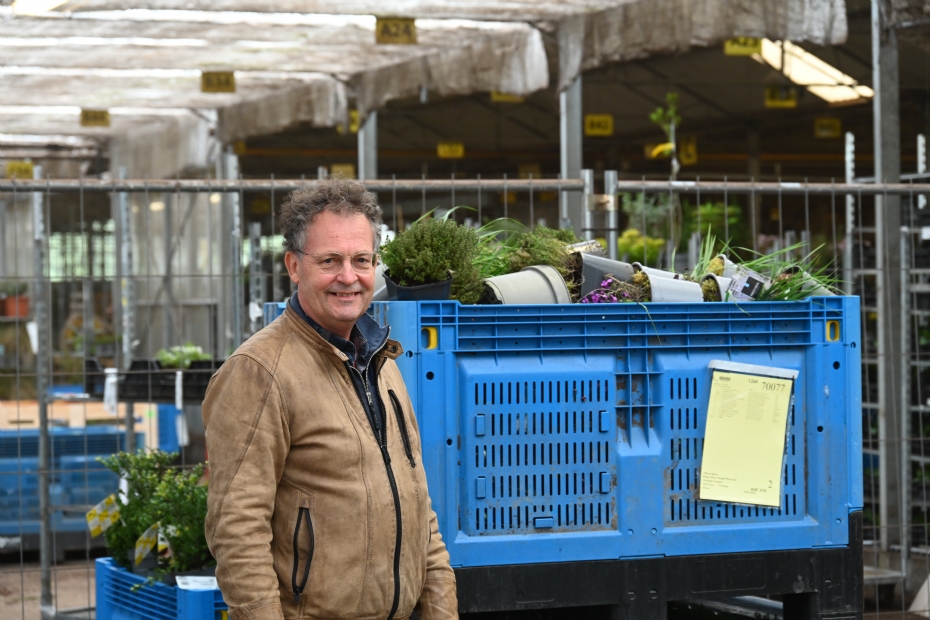 | | According to Van Wezel, these blue pallets are an underestimated asset: robust, reusable and foldable |
|
|
Webshop
The first webshop was technically limited, but it demonstrated that the model could work. The share of online orders gradually increased from a few percent to eventually becoming the majority of turnover. According to Van Wezel, growth accelerated when a conscious decision was made to become less dependent on traditional sales channels. Quotations were limited and customers were encouraged to order directly through the system. The next step was the development of a new webshop based on Magento (a programming language, EDITORIAL NOTE), which according to Van Wezel better matched user needs. The Magento webshop focuses more on ease of use, filtering and presentation, and less on internal system logic. The ordering process has become simpler and more transparent for users, similar to what consumers are accustomed to with Bol.com and Amazon.
Plant Market
This combination of expertise — plant trading on the one hand and digitalisation on the other — formed the basis for the further development of Plant Market. After the acquisition of SAP Holland from the Irish owners in 2018, strategic control came fully into the hands of Fons van Wezel and his business partner. Platform thinking is central to that strategy. Plant Market operates as its own marketplace, but the technology can also be deployed as a white-label solution. This means other parties can use the same infrastructure under their own name and with their own customer approach. One example is Bloemenpark Appeltern, which operates through its own webshop while logistics and fulfilment are handled by Plant Market. Appeltern can focus on customer experience without having to manage the underlying logistics process.
Customer contact
The model makes it possible to combine different roles within the chain. One party can focus on marketing and customer contact, while Plant Market handles logistics and order processing. According to Van Wezel, this creates room for specialisation: every link in the chain can concentrate on its own added value. For growers, this theoretically provides more direct access to the market. At the same time, it also requires changes in their way of working. Data is becoming an increasingly important factor. Up-to-date stock information and good photographs are necessary to remain visible on the platform. Without such information, participation becomes more difficult.
|
|
We no longer trade in plants, but in data and logistics.
| |
|
Hubs
Logistics remains the determining factor. Plant Market works with hubs and fixed routes to organise transport efficiently. Orders from different customers are combined, allowing for fully loaded shipments. According to Van Wezel, this is where scale offers a major advantage: the larger the network, the more efficiently logistics can be organised. This scalability also forms the basis for the company's European ambitions. The platform is technically prepared for multiple languages and countries. In practice, however, expansion requires more than software alone. Local hubs, grower networks and logistics partners are needed to make the model operational. Plant Market has already acquired a branch in England and is exploring further expansion into other countries.
This article was previously published on 11 May 2026 on the website of De Hovenier.
| LOG IN
with your email address to respond.
|
|
|
| There are no comments yet. |
|
| |
Anyone can place small ads for free through their own account.
Place a free ad
|
|
|
|