When RIVM gets involved in green space, something is happening |
|
|
|
|
 |
| 291 sec |
No new green standard, but a shift in perspective
Green professionals are already familiar with the 3-30-300 rule, GIOS and tree standards. That framework has been in place for some time. Yet at the end of 2025, something new was added. The RIVM published rules of thumb for exercise, green space and social interaction in public areas. The institute itself emphasises that these are not new standards. However, anyone reading the report will notice a shift in how public space is being viewed.
This article was previously published on March 2, 2026 on the website of Stad + Groen.
In many plans, green space is addressed only later. First come housing, roads and parking; only then is it considered whether there is still room for trees, parks or playgrounds. RIVM does not reverse that order, but it does add another perspective. When decisions are made about streets and squares, health is now also taken into account. Not from a design or maintenance perspective, but from a public health viewpoint. That makes this publication different from many previous guidelines.
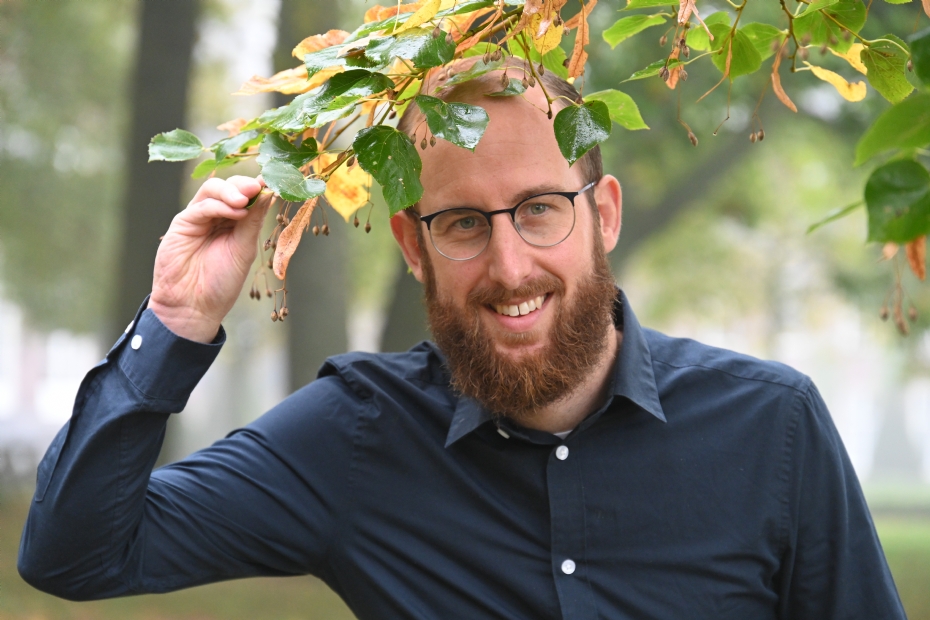 | | Joeri Meliefste - Sweco |
|
|
A different voice in the conversation
That different voice does not come from the green sector or the design world, and that stands out. RIVM shows that the layout of neighbourhoods influences how people feel, how much they move and how they use their surroundings. It is not only about sports, but also about heat, stress and quality of stay. For consultancy and engineering firms, this helps in discussions, notes Joeri Meliefste of Sweco. 'We can now say: this is not just a wish from designers or green departments; it is scientifically substantiated. The fact that RIVM says this gives our advice additional weight.'
We already know the rules
In terms of content, much is familiar. The 3-30-300 rule plays a central role: a view of green from home, 30 percent tree canopy cover in the neighbourhood and a green area within walking distance. Meliefste: 'RIVM broadens this rule: the "3" in the 3-30-300 rule explicitly refers to three trees, whereas RIVM says: a view of green. I favour the latter. Of course, not every blade of grass counts, so you still need to define what qualifies as green and how large it should be.' There is also significant overlap with the Groen in en om de Stad (GIOS) guidelines. Distances and quantities largely correspond, such as 350 to 500 square metres of green space per dwelling within five kilometres.
That is logical. GIOS helps municipalities make spatial decisions: where to create green space and at what scale. RIVM looks at the same space but asks a different question: what does this layout mean for residents' daily lives? 'We already know this reasoning,' says Meliefste, 'but it is now explicitly linked to health. That helps to tell the story differently.'
From figures to daily use
At the same time, the rules of thumb remain broad. Percentages and distances provide guidance but leave room for interpretation. For example, RIVM states that 25 percent of public space should be exercise-friendly. 'On paper, that is easily arranged,' says Meliefste. 'But where exactly is that space located? In every street? Or somewhere out of sight? The rules of thumb do not specify that.'
The same applies to green space. RIVM rightly emphasises that it is about having a view of green, not just the number of trees. But according to Meliefste, the translation into design and use remains underexposed. 'If the route to a park runs across a hot, paved square, people drop out. They will either take the car or not go at all.'
Lydia van Herwaarden-Slob, senior communications advisor for the Healthy Living Environment Programme at RIVM, explains: 'The report focuses on green space close to home. This is particularly important for people who cannot walk far, such as young children and people with limited mobility. That is why analyses are conducted at neighbourhood level: where do people live and what green space is nearby? The rules of thumb are mainly intended to safeguard space for green, exercise and meeting. For further elaboration, we refer to other tools, such as the Gezond Groen Wijzer. This outlines the expected health effects per type of green space, for example the importance of cool and pleasant walking routes. When applying the rules of thumb, there is also room to deviate with proper justification if the situation calls for it.'
Creating space requires choices
This perspective aligns with practice but also exposes tensions. Public space is already full. Mobility and parking play a major role. 'Cars take up an enormous amount of space,' says Meliefste. 'That is largely due to habits. In neighbourhoods with central parking facilities, you first see resistance, but later residents say: it is cooler, greener and simply more pleasant.'
According to him, this requires different choices than usual: less space for cars, combining functions and organising parking differently. 'That does not happen automatically. Municipalities need real courage for that.' RIVM states that health considerations should be included from the outset.
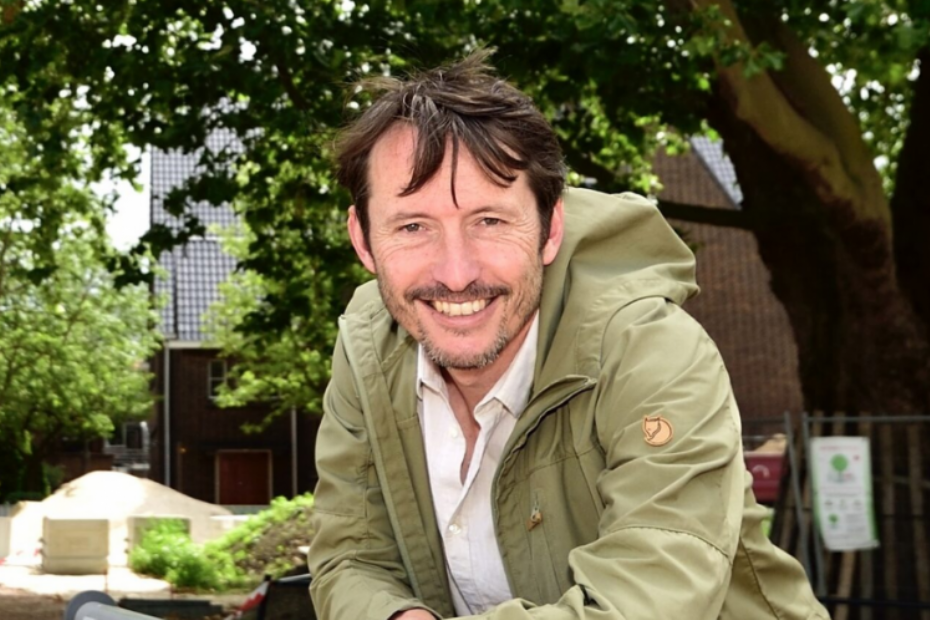 | | Marc Meijer - Norminstituut Bomen |
|
|
Clash with daily practice
Marc Meijer, director of the Norminstituut Bomen, also sees the value of the RIVM publication mainly in its source. 'When a national health institute states that green space is essential, it helps enormously at policy level.' At the same time, he believes the report pays too little attention to the reality of existing cities. He cites the attention for wider pavements to facilitate social interaction as an example. 'I have never experienced a lack of social contact because a pavement was too narrow. What you get then is more paving, while we are actually looking for space for green.' Meliefste fully agrees: 'RIVM is in fact advocating even more unnecessary paving.'
'At Sweco, we say pavements do not need to be wider than two metres, yet RIVM now advocates wider ones.' According to Meijer, the report underestimates how crowded public space already is. Above and below ground, challenges accumulate: cables and pipelines, water storage, mobility, energy transition and greening. Van Herwaarden-Slob responds: 'With the rules of thumb, we show how much space is needed from a health perspective. Because spatial planning in the Netherlands is complex, we advise adapting the rules locally. We also encourage stacking functions: exercise, green and social interaction often go hand in hand.'
Protect what is already there
What Meijer particularly misses is an explicit call to better protect existing green space. 'In established neighbourhoods, there is often no additional space available. What is already there therefore has extra value. What you have does not need to be recreated.' He is also critical of the attention given to potential disadvantages of green space, such as allergies and fine particulate matter. 'These are known, manageable issues. With diversity in tree species, many problems can be prevented. By emphasising this so strongly, you weaken your own message.'
No miracle cure, but direction
RIVM's rules of thumb introduce few new figures. Their value lies mainly in the perspective they offer. Green space, exercise and social interaction are explicitly linked to health. This adds weight to the subject in discussions about public space. At the same time, the rules of thumb do not replace technical standards. Guidelines for trees, maintenance and infrastructure remain necessary. The RIVM publication does not resolve the competition for space, but it does make clear that the lack of green space is a structural issue — and therefore one that can no longer easily be ignored in planning. The discussion thus shifts from feasibility to significance. Van Herwaarden-Slob: 'A next step following this publication is stacking and integrating the rules of thumb. By engaging with practice and learning together where we encounter obstacles and how we can make the rules more practically applicable.'
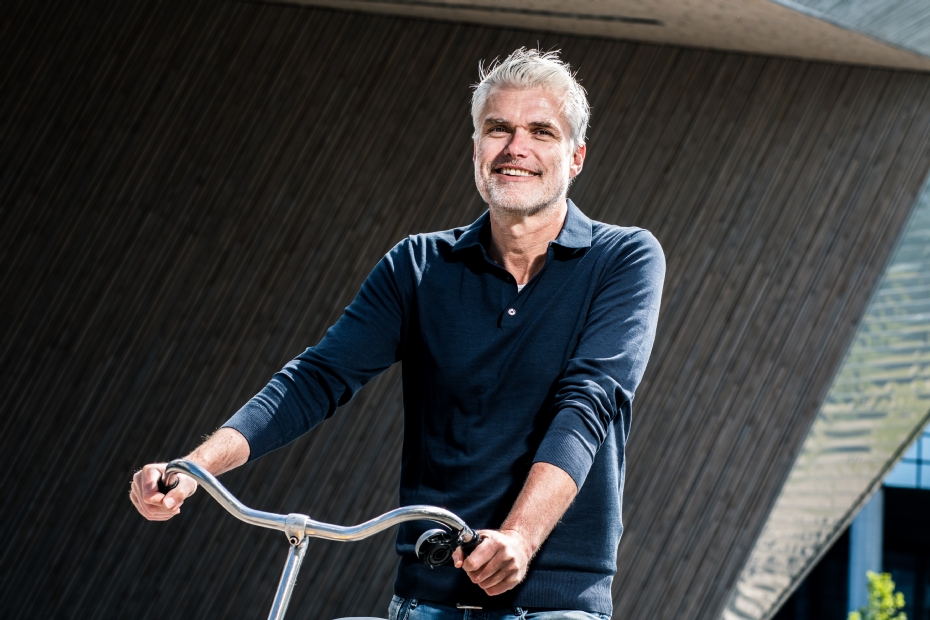 | | Vincent Luyendijk |
|
|
Starting point for a different conversation
For writer and advisor Vincent Luyendijk, the significance of the rules of thumb lies mainly in what they trigger. He does not see them as an endpoint, but as a starting point for a broader conversation about how we use space. 'For decades, we have designed cities from the perspective of traffic flow and efficiency. These rules present something different: health, well-being and quality of stay.' According to Luyendijk, this is precisely the shift needed to create places where people feel comfortable, a theme he also addresses in his book De fijne stad. In his view, the strength of the rules lies not in precision, but in the invitation to reassess choices. 'It is not about whether it fits within the existing system, but about what people need for a healthy living environment.' Figures such as the 25 percent exercise-friendly space make that conversation concrete, especially when compared with the large spatial claim of mobility. In that sense, the rules do not prescribe how things must be done, but rather what the conversation should focus on.
| LOG IN
with your email address to respond.
|
|
|
| There are no comments yet. |
|
| |
Anyone can place small ads for free through their own account.
Place a free ad
|
|
|
|





