What do wider fibre spacing and thicker fibres mean for maintenance and playing quality of hybrid pitches? |
|
|
|
|
 |
| 156 sec |
CSC introduces hybrid system from TenCate subsidiary Limonta to the Netherlands
The hybrid pitches at the new training location of PEC Zwolle will be reinforced with fibres placed at a greater distance from each other than is common. According to sports field contractor CSC Sport, a special fibre type still creates a strong pitch that is 'easy to maintain and offers a clean, consistent ball bounce and roll'.
| The bundled fibres protrude slightly above the surface. |
This spring, a machine brought over from Italy by Limonta Sport will stitch the fibres into the ground in a 3x2 centimetre pattern. In the second half of December, the grass sods for one and a half pitches were already installed on the new training campus. Thanks in part to several mild winter weeks, the grass has established well in the meantime. The installation of the vertical fibres, which reinforce the pitch, completes the two football fields and a smaller training pitch. The fibre bundles are spaced one centimetre further apart than in the standard 2x2 centimetre pattern. Rutger Schuijffel of CSC Sport mentions easier maintenance as one of the key advantages. 'With the chosen fibre type, we also achieve high functionality.'
|
|
'The PE fibres are somewhat thicker and therefore have good upright stability. Due to the material used, they still feel soft.'
| |
|
Soft
The artificial grass fibres are inserted vertically 18 centimetres into the ground and protrude slightly above the mowing height. Each 'fibre' consists of two bundles of six filaments. Together they create a somewhat rough surface, contributing to firm grip in the soil. This applies to any type of fibre and is not unique, explains Rutger Schuijffel of CSC Sport. 'The difference lies in the material and thickness. The PE fibres are thicker and therefore stand upright well. At the same time, the chosen material makes them feel soft.' According to him, this soft material is 'slide-friendly'. The hybrid fibres are intended to match the playing characteristics of the surrounding natural grass. The fibres make up a maximum of 7 percent of the pitch; the rest consists of natural grass. 'Players will hardly notice their presence, except that the pitch is firm, remains intact better and always provides a consistent ball roll.'
|
|
'Players will hardly notice the difference, only that the pitch is firm, stays intact better and always provides a consistent ball roll.'
| |
|
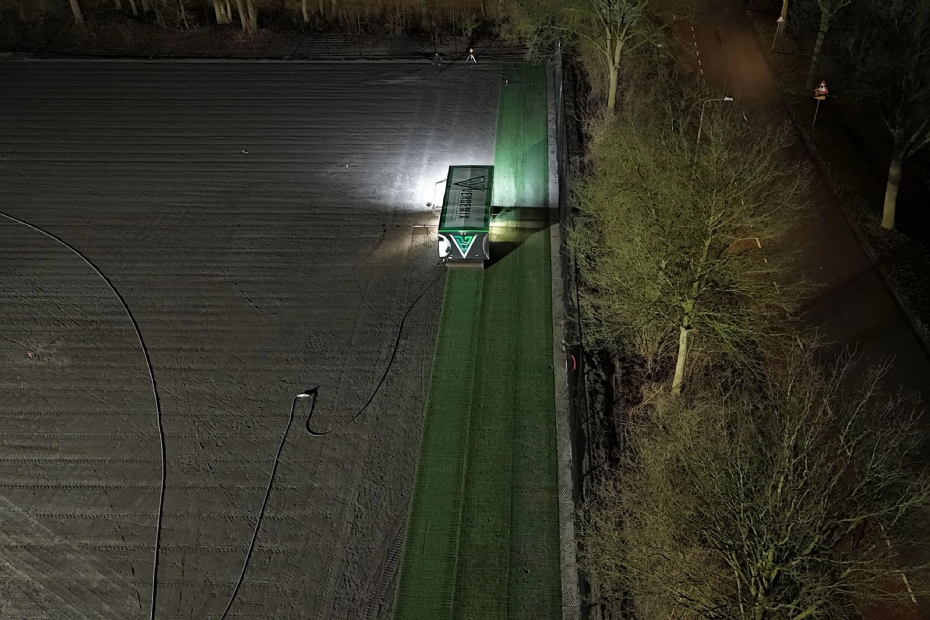 | | Night work. |
|
|
Fully booked
The Bergamo-based Limonta Sport, responsible for the stitching work, is an Italian company and, like CSC Sport, a subsidiary of TenCate. According to Schuijffel, Limonta developed this new installation method. About five years ago, it first adapted two existing machines on the market. 'After that, several machines were built under their own management.' One of these machines was used in Zwolle. The two hybrid football pitches and a smaller training field were fitted with the fibres in just over two weeks. 'The work continued 24 hours a day.' Immediately afterwards, the machines were transported abroad again. 'Limonta operates these machines worldwide. They are already heavily booked for a long time, including projects in Mexico and the United States for the upcoming World Cup.' Schuijffel sees the project at PEC Zwolle as a good opportunity to introduce the Limonta system to the Dutch market. It is marketed under the name Verdemix. CSC Sport offers it alongside its existing systems XtraGrass and MIXTO.
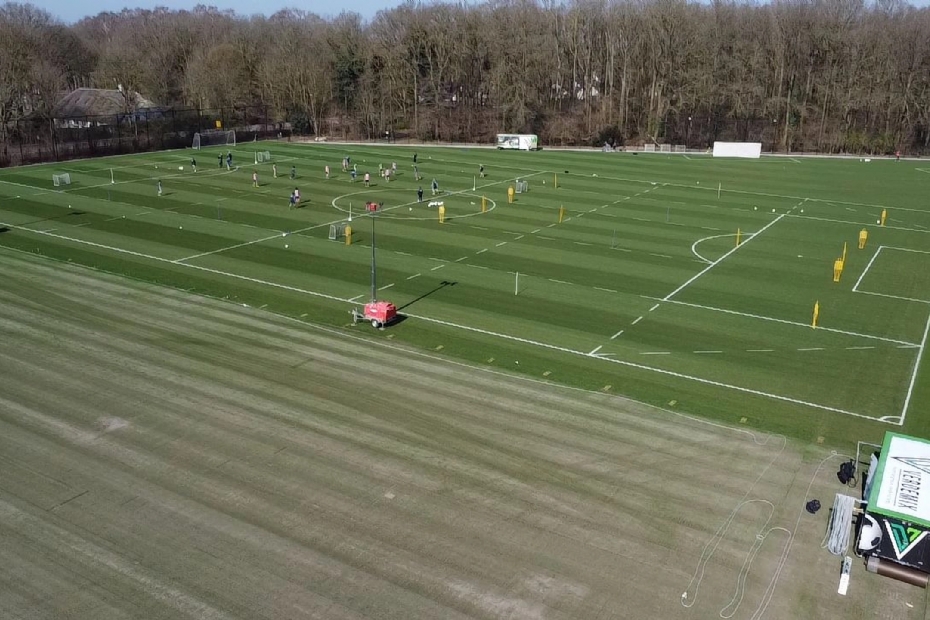 | | Construction of the new training location of PEC Zwolle. |
|
|
Maintenance
The pitches being constructed in Zwolle are completely new. Groundworks were carried out by contractor Jansen-Wijhe from Wijhe. 'This is a regional partner we work with regularly.' As always at PEC Zwolle, field manager Alfred Meiberg will be responsible for maintenance. The sports campus is being developed on the site of the former hockey club De Pelikaan, which left about 15 years ago. The only remaining structure is the former clubhouse, now used as group accommodation. According to Schuijffel, the intention is for PEC Zwolle to renovate and use it in the future 'as a players' facility with appropriate amenities'.
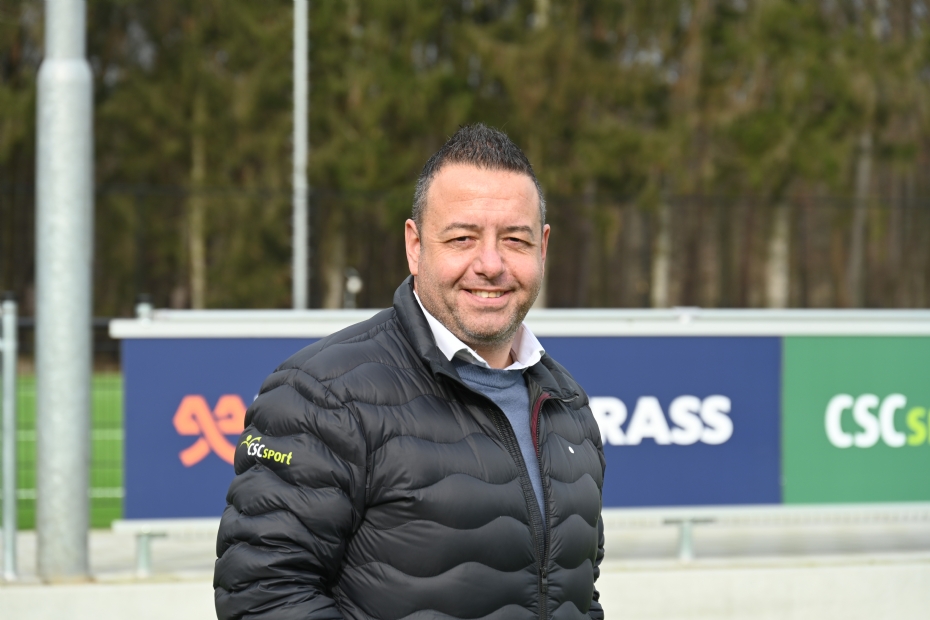 | | Rutger Schuijffel: 'Limonta operates these machines worldwide.' |
|
|
Stadium
Until then, the stadium will retain its current role. When it still had an artificial surface, daily training at the stadium made sense. After switching to hybrid grass six years ago, a new training location became necessary. Nearby club Be Quick '28 provided a solution and will continue to do so, even after the first team moves to De Pelikaan. This site is located a short distance away. A new artificial pitch is also planned there later. However, more space is needed for all activities, says Schuijffel, including for the academy and women's and girls' teams. 'Be Quick will therefore remain in the picture.'
This article was previously published on 24 April 2026 on the Fieldmanager](https://www.fieldmanager.nl/article/53710/wat-betekenen-een-grotere-vezelafstand-en-dikkere-vezels-voor-onderhoud-en-speelkwaliteit-van-hybride-velden]Fieldmanager) website.
| LOG IN
with your email address to respond.
|
|
|
| There are no comments yet. |
|
| |
Anyone can place small ads for free through their own account.
Place a free ad
|
|
|
|





