A digital twin only becomes valuable when it changes policy |
|
|
|
|
 |
| 169 sec |
Alkmaar uses data not only to better understand the city, but above all to make better decisions
For many municipalities, a digital twin is still mainly a technical concept. In Alkmaar, it has evolved into a tool that enables departments to work together on policy issues. According to programme manager Niek Hendriks, the greatest benefit does not lie in the software itself, but in the fact that everyone is working from the same information. As a result, not only the speed of working has changed, but also the way decisions are made.
| Alkmaar (Photo by Erik Boschman and via JUB Holland) |
'It is about connecting the challenges within the municipality,' says Hendriks. According to him, a digital twin only becomes truly valuable when different policy areas use the same information. The technology itself is not the focus, but rather the question of which policy decisions can be improved when all relevant data are brought together in one place.
From insight to policy
According to Hendriks, that difference is now clearly visible. While the municipality mainly knew how much green space it had a few years ago, Alkmaar can now analyse much more precisely how the city is developing. 'We can now see much more clearly how Alkmaar's green infrastructure and ecological development are progressing, and in which neighbourhoods green space is increasing or decreasing. We also look at the quality of the greenery. Satellite data show us not only where green space is located, but also whether it consists of grass, shrubs or trees. In addition, we can compare these developments with previous years.'
This information is not only used by the green management department. According to Hendriks, making all data available within the same digital environment creates new connections between different policy areas.
|
|
The greatest benefit lies not in the software, but in the fact that everyone works from the same information
| |
|
Different challenges, the same map
According to Hendriks, the digital twin is now being used for a wide range of challenges, including biodiversity, heat stress and climate adaptation. 'We have hundreds of information and analysis layers. Think of tree height and canopy width, heat maps, the balance between green and grey areas, and ecological barriers. This allows us to quickly understand how to manage different challenges in an integrated way.'
Sometimes this leads to unexpected insights. Hendriks says that data on energy labels, for example, also turned out to provide information about investments in listed buildings. 'That creates entirely new policy questions that you might not have anticipated beforehand.'
Not faster, but different
Alkmaar's ambition goes beyond speeding up processes. The more interesting question is whether the digital twin actually leads to different policy decisions.
'A concrete example is our policy on small wind turbines at agricultural businesses. In the first version of the policy, a large setback distance from the ring canals was required. When we analysed this using the digital twin, it became clear that this left only a very limited number of suitable locations. The analysis showed that the required distance was greater than necessary. We therefore amended the policy and reduced the setback distance. As a result, many more suitable locations became available. In this case, the digital twin not only provided faster insight, but also led to an actual change in policy.'
|
|
Data only become valuable when they lead to different conversations and better-informed decisions
| |
|
Collaboration is the greatest benefit
According to Hendriks, the biggest change ultimately lies not in the technology, but in the organisation itself.
'Because all information is available in one place, we are raising the municipality's overall knowledge level. The greatest benefits are better collaboration, faster working and the costs we save. In the past, up-to-date information was often held by just a few individuals. Now everyone works from the same information.'
According to him, this makes it easier to balance different interests at the same time. Green policy advisers, planners, traffic engineers and sustainability specialists no longer work from separate datasets, but from one shared view of the city.
Can a municipality still do without one?
Hendriks is clear about the future. 'In today's digital society of 2026, it is no longer acceptable for a municipality not to have a central system for its information.'
He immediately links this to a broader development. Since this year, the Dutch Digital Twin Foundation has been established to support public organisations in developing their own digital twins. According to Hendriks, this has removed an important barrier.
'Municipalities can certainly make good decisions without a digital twin. The difference lies mainly in the speed, completeness and reliability of the information on which those decisions are based. Without a central digital environment, you are often dependent on information from different systems, the knowledge of individual colleagues and manual analyses. That takes more time and increases the risk that important connections will be overlooked. A digital twin brings together data from different sources and makes them immediately accessible. As a result, municipalities can see the consequences of policy choices more quickly and make better-informed decisions. Municipalities that continue to work in the traditional way miss the opportunity to look at challenges in an integrated and data-driven manner.'
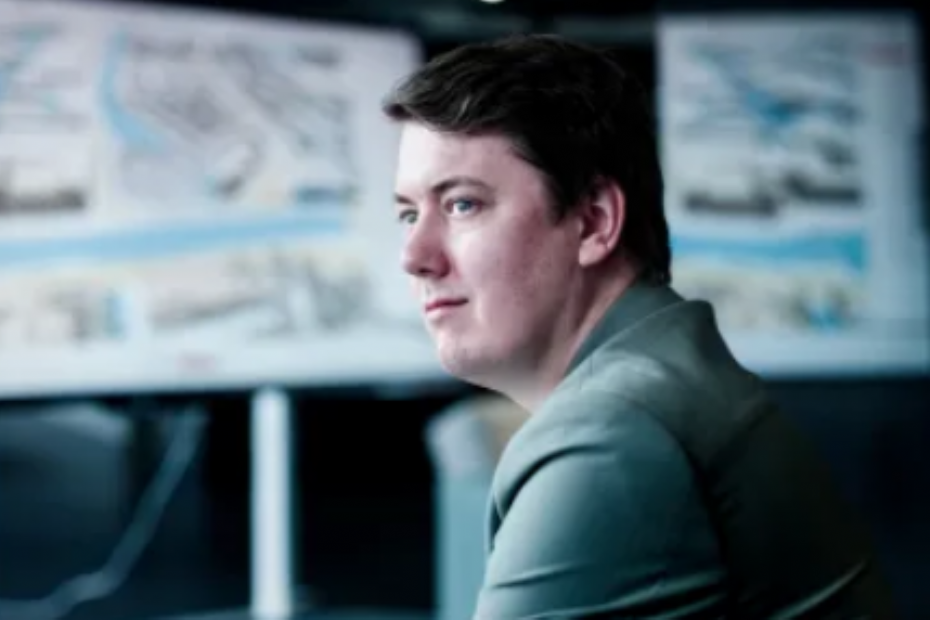 | | Niek Hendriks, programme manager at the Municipality of Alkmaar |
|
|
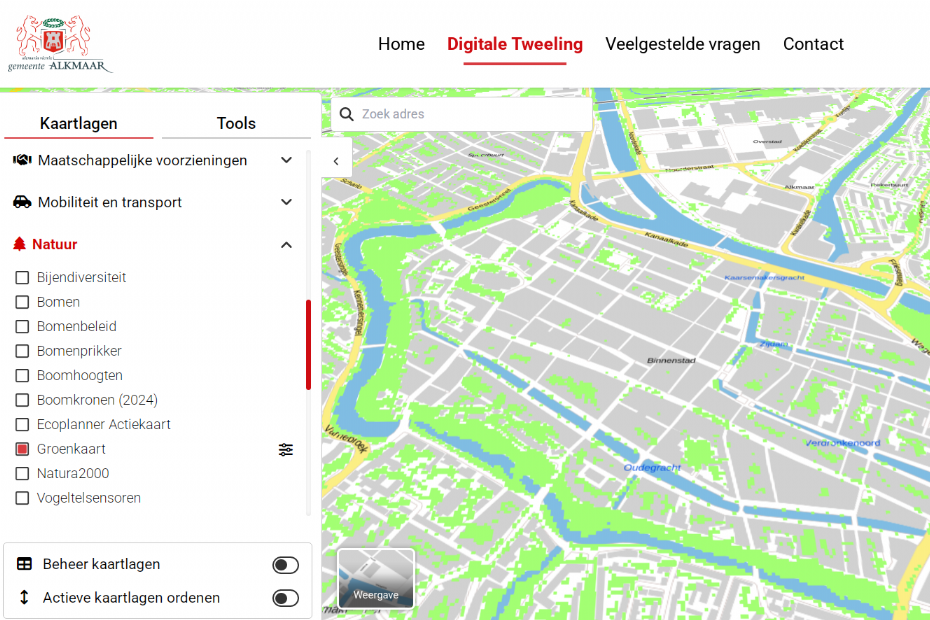 | | Alkmaar's digital twin |
|
|
This article was previously published on 28 July 2026 on the website of Stad + Groen.
| LOG IN
with your email address to respond.
|
|
|
| There are no comments yet. |
|
| |
Anyone can place small ads for free through their own account.
Place a free ad
|
|
|
|





