From seven battery safety cabinets to four: Utrecht starts by looking at the batteries |
|
| GARDEN AND PARK TECHNOLOGY |
|
|
|
|
 |
| 172 sec |
Combining machines, batteries and charging facilities intelligently reduces the number of safety cabinets needed
How many battery safety cabinets do you need to charge battery-powered handheld equipment safely? For the municipality of Utrecht, the initial answer appeared to be seven. After taking a closer look at the machines and batteries, four cabinets proved sufficient. Remco van Kuilenburg, director of Seefion, believes this illustrates where the real benefits lie: not simply supplying charging facilities, but first examining what actually needs to be charged.
| The Seefion Safe 20 HE, four of which have been put into use by the municipality of Utrecht |
Four years. That is how long Seefion had been in contact with the municipality of Utrecht before the project finally took shape this year. Several project managers came and went during that period, Van Kuilenburg explains. In early 2026, the municipality eventually issued a request for charging facilities for batteries used in electric handheld equipment.
Seefion was awarded the contract and has since received approval for a second location. Further municipal sites will then need to be assessed. However, according to Van Kuilenburg, the most interesting part of the project is what happened before the first cabinets were installed. 'The original request was based entirely on backpack batteries. That would have required seven cabinets.'
|
|
The original request specified seven cabinets, but four ultimately proved sufficient
| |
|
First examine what needs to be charged
Rather than simply supplying the seven cabinets, Seefion worked with Poel Amsterdam to assess the entire combination of machines, batteries and charging facilities. The backpack batteries proved to be the determining factor in the required charging capacity.
'Together with Poel, we started looking at whether we could reduce the number. The backpack batteries were exchanged and the machines were replaced with models using compact battery packs. As a result, we ended up needing four cabinets instead of seven.'
According to Van Kuilenburg, this difference brings several benefits. Fewer charging facilities are required, installation costs are lower and the cabinets take up less space at the municipal depot. 'That is exactly why this collaboration is important. You are not just looking at the cabinet, but also at the batteries that need to go inside it.'
For Van Kuilenburg, the Utrecht project demonstrates that electrification involves more than replacing petrol-powered machines with battery-powered alternatives. The layout of the depot must also be adapted accordingly. Reconsidering earlier equipment choices can therefore be worthwhile.
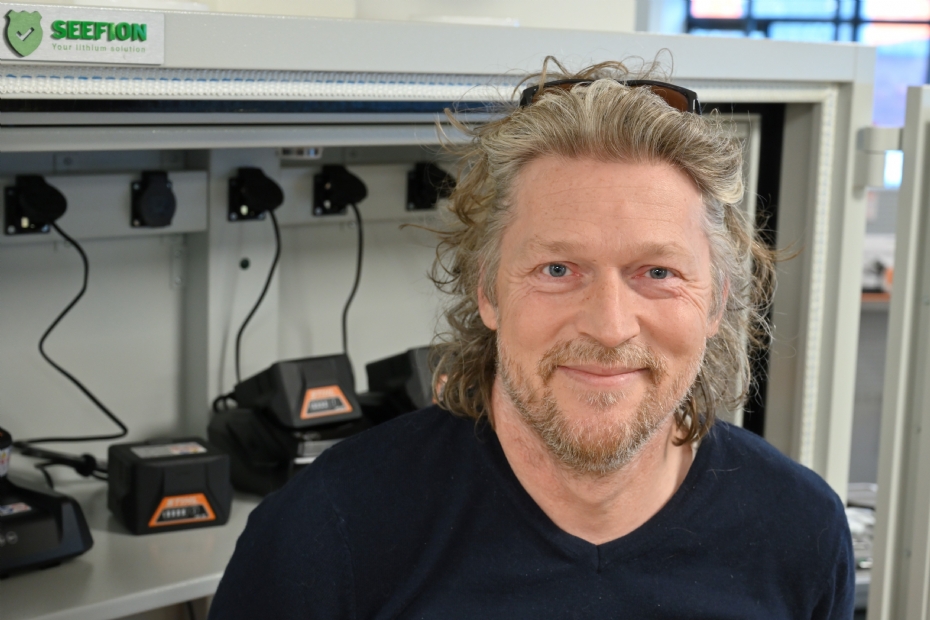 | | Remco van Kuilenbrug |
|
|
|
|
You need to consider not only the cabinet, but also the battery-powered equipment it needs to accommodate
| |
|
Equipment suppliers know the machines
This approach is also why Seefion prefers to work closely with suppliers of machinery and equipment. In Utrecht, that partner is Poel. According to Van Kuilenburg, such suppliers understand both the machines and the end users. 'They know the market, they know the customer and they know which machines are being used by the end customer.'
Seefion then contributes its expertise in storing and charging lithium-ion batteries. 'That combination works. Of course, we could simply install a cabinet, but when you examine what is actually needed together, you can arrive at a completely different solution.'
In Utrecht, this meant three fewer cabinets than originally planned. Van Kuilenburg emphasises that this does not simply mean the municipality has less charging capacity. The combination of batteries and machines has been adjusted so that the four remaining cabinets meet the requirements of the new setup.
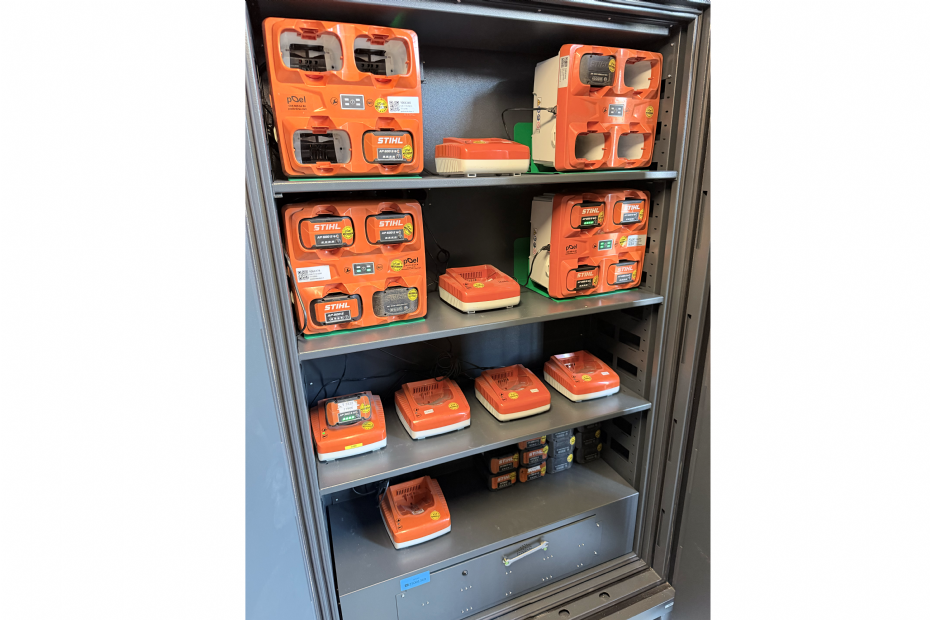 | | The Seefion Safe 20 HE |
|
|
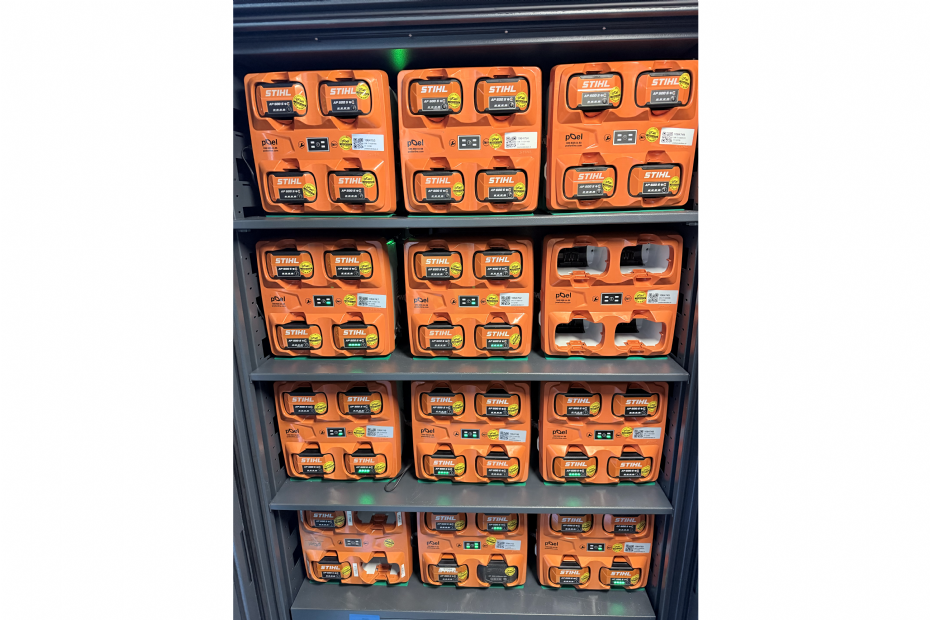 | | The Seefion Safe 20 HE |
|
|
Next location follows VDMA guidelines
Seefion is now working on a second location for the municipality of Utrecht. The same type of battery safety cabinet will be used again: the Seefion Safe 20 HE. According to Van Kuilenburg, however, the installation goes a step further than previous projects.
'We have connected this installation fully in accordance with the VDMA guidelines, including extraction and smoke gas exhaust systems. In fact, we have already installed it in the way these systems will need to be installed in the future.'
This development is relevant as more municipal maintenance departments and landscaping contractors switch to battery-powered handheld equipment. As the number of batteries increases, so does the need to consider how they are stored and charged at depots. Battery safety cabinets are therefore becoming an increasingly important part of the infrastructure needed for an electric working environment.
|
|
When you work together to assess what is actually needed, you can arrive at a completely different solution
| |
|
More locations to be assessed
The Utrecht project will not end with the first two locations. According to Van Kuilenburg, the intention is to assess the remaining municipal sites and determine where additional facilities are required. The approach that reduced the number of cabinets from seven to four at the first location could therefore also be applied elsewhere.
For Van Kuilenburg, this is the most important lesson from the project. Rather than starting with the number of cabinets, start with the practical requirements: which machines are being used, which batteries do they require and how much charging capacity is actually necessary?
'We already have a connection with the supplier of the battery-powered equipment. That allows us to calculate the requirements and determine together what is needed.' In Utrecht, those calculations produced a particularly tangible result: seven battery safety cabinets were originally specified on paper, but only four were needed in practice.
This article was previously published on 26 October 2026 on the website of Stad + Groen.
| LOG IN
with your email address to respond.
|
|
|
| There are no comments yet. |
|
| |
Anyone can place small ads for free through their own account.
Place a free ad
|
|
|
|


