More work than workers: how can the green sector keep up? |
|
|
|
|
 |
| 221 sec |
Green sector companies are looking for ways to maintain the same quality with fewer employees
Labour shortages in the green sector are nothing new, but they are increasingly shaping how companies organise their work. There is consistently more work available than there are employees to carry it out. This applies to almost every role, from mower operators and site supervisors to project managers. At the same time, demand for green space services remains high. How can companies ensure they have enough people to get the work done in the future? Recruiting more employees is one option, but training, automation and smarter organisation also have a role to play.
| Young people discover careers in landscaping, infrastructure and engineering at Wallaard Groen (Image: Wallaard Groen) |
Simply stepping up recruitment efforts will not solve the labour shortage. That is the experience of Robin Castelijn, managing director of Wallaard Groen. He sees three priorities: retaining and developing existing employees, attracting new staff and encouraging more people to enter the sector. 'You must not get carried away and focus only on recruitment, recruitment, recruitment,' says Castelijn. 'If you do, you lose sight of the good employees you already have, who also need opportunities to develop and reasons to stay.'
When recruiting new employees, he also considers the existing workforce. In a tight labour market, applicants can make substantial demands, but these must remain consistent with conditions within the company. 'You have to consider the terms on which you bring someone in compared with your existing employees. People do talk to each other.'
|
|
'You must not get carried away and focus only on recruitment, recruitment, recruitment'
| |
|
Raising your profile and retaining employees
For Castelijn, recruitment also means showing people what kind of company Wallaard Groen is. The company uses images and videos to showcase its projects and, above all, its employees. 'We try to use plenty of photos and videos and let people tell their own stories. Making things, completing projects, showing what you have achieved and being proud of your work!'
The company's social media presence has changed considerably in recent years. 'When I started, we had three different LinkedIn pages: one for landscaping, one for roofs and one for infrastructure.' These have since been combined. According to Castelijn, the number of followers grew from approximately 300 across the different pages to more than 4,000 on a single page. The company also raises its profile at regional events and activities for schools and young people.
But attracting employees is one thing; retaining them is another. Castelijn believes the working atmosphere plays an important role. 'There is certainly plenty of laughter in our company. My view is that when people enjoy their work, they are willing to learn. They are motivated, and that is when they perform at their best.'
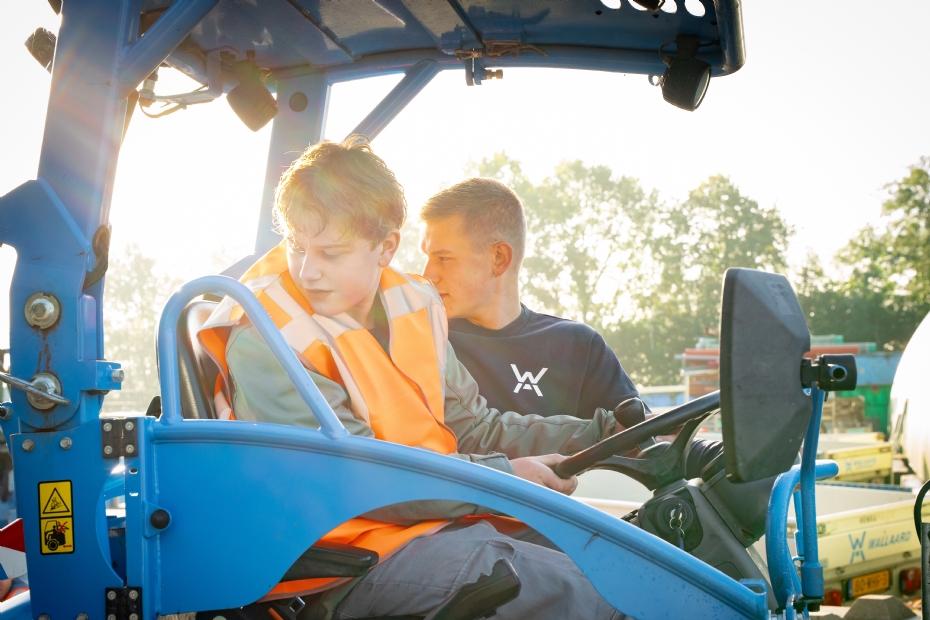 | | Getting behind the wheel gives young people their first experience of practical work (Image: Wallaard Groen) |
|
|
Creating new opportunities to enter the sector
Recruiting employees from other companies does not increase the overall pool of available workers. That is why Wallaard Groen is working with regional vocational schools to develop a practical training area at its own premises. Practical lessons will be provided in landscaping, infrastructure and engineering. Primary school pupils also visit during organised company tours to discover what practical work involves. 'It is about getting young people interested in the sector as early as possible,' says Castelijn. 'Of course, you hope that as many of those boys and girls as possible will eventually come to work for you.'
An unusual aspect of the initiative is the involvement of former employees. Skilled workers who have retired are helping to develop teaching materials and practical lessons. This partly emerged from discussions with schools, which are also struggling with teacher shortages. 'One school told us: we do not have enough teaching staff either. Could you help us think of a solution?' Former employees can help develop practical lessons and then supervise them.
Who still wants to work outdoors?
Castelijn believes the labour shortage also reflects a broader social trend. In his view, education has long placed a strong emphasis on academic progression, while there is still considerable demand for people who want to carry out practical work and have the skills to do so. 'Parents encourage their children to pursue the highest possible level of education, which often leads to an office job. But many overlook the fact that someone still has to build the road leading to that office or create the garden around it.'
At the same time, he sees that outdoor work appeals to people changing careers. Wallaard Groen employs people who previously worked in offices, hospitality or healthcare. 'They simply think: just let me do something outdoors.' For Castelijn, this reinforces the importance of introducing young people to practical work at an early age.
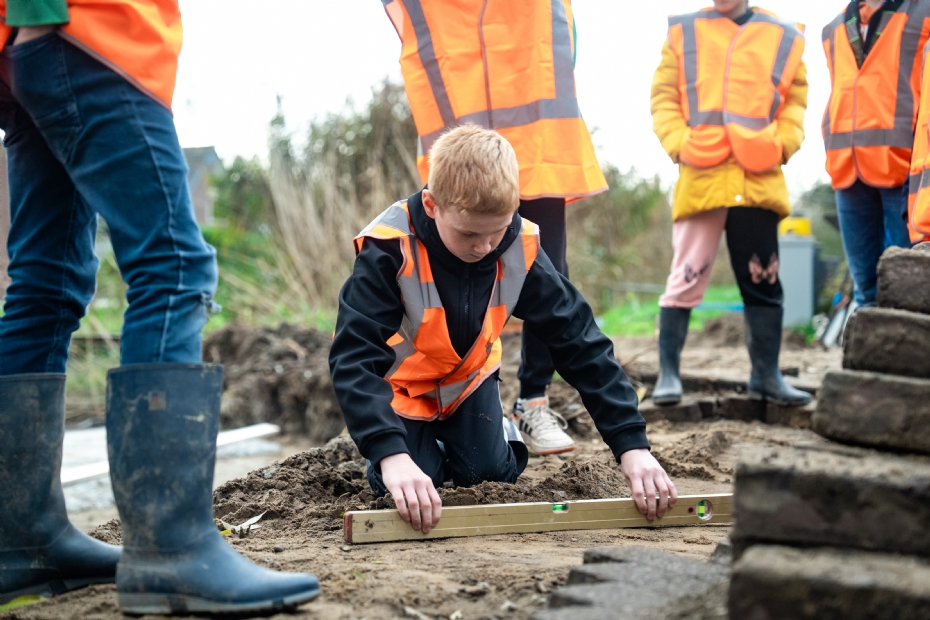 | | Introducing children to practical work starts at an early age |
|
|
|
|
'We need to get young people interested in the sector as early as possible'
| |
|
Automation helps, but cannot replace people
According to Castelijn, automation and robotics will not automatically solve the labour shortage either. 'Naturally, you try to automate as much of the work as possible, wherever you can. Or at least make the work as physically manageable as possible.' However, many tasks still require people. 'Things still need to be built, and people still need to think.'
Wallaard Groen already uses AI for office activities, including processing information more quickly, improving coordination between schedules and handling quality reports submitted from the field.
The company is also trying to work more efficiently outdoors. One consideration is the geographical location of projects. 'You look at where your projects are and try to find other work nearby. You do not want one project in Groningen and another in Limburg.' Working more regionally means less travelling time and more efficient use of available employees. The idea is to find people close to the work, rather than the other way around.
Labour shortages force companies to make choices
Ultimately, the available workforce also determines which contracts Wallaard Groen accepts. 'You consciously choose which activities to take on and which to leave.' The company considers the knowledge and skills available within its workforce.
This can also create opportunities. Companies with specialist expertise and sufficient employees for a particular type of work can use this to distinguish themselves. However, capacity can quickly become a limiting factor in specialist activities. 'If you only have a few employees who can do that work and an innovation suddenly takes off, you quickly run into difficulties. At some point, you receive so many requests that you would need to carry out three projects simultaneously. And you simply cannot do that.'
According to Castelijn, Wallaard Groen could accept more work and potentially expand further if more employees were available. Labour shortages therefore affect not only how many people a company recruits, but also how it organises its work and which contracts it accepts.
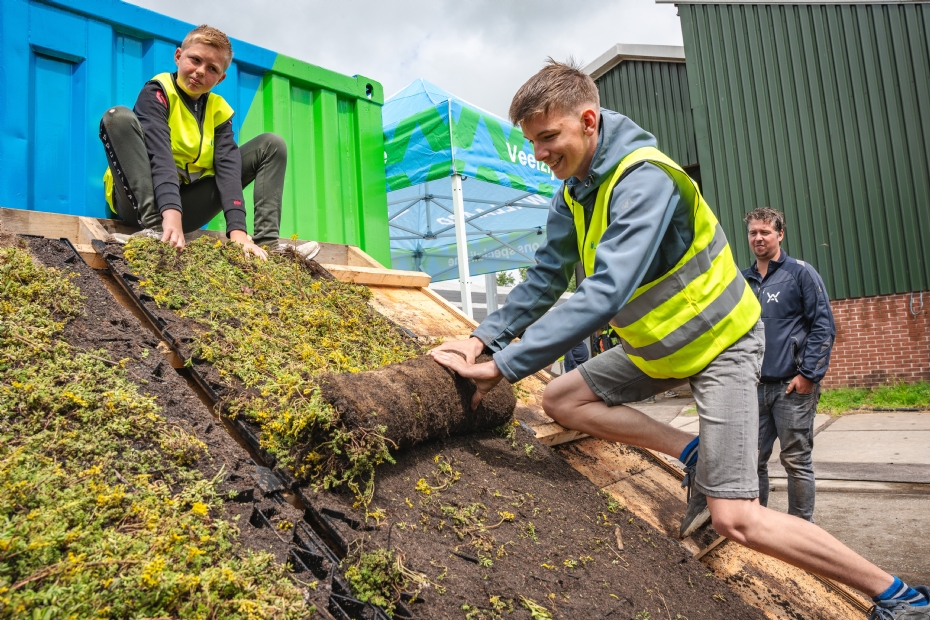 | | Learning by doing: young people try out green sector work during a practical training day (Image: Wallaard Groen) |
|
|
This article was previously published on 4 November 2026 on the website of Stad + Groen.
| Wallaard Groenvoorziening | |
| |
| LOG IN
with your email address to respond.
|
|
|
| There are no comments yet. |
|
| |
Anyone can place small ads for free through their own account.
Place a free ad
|
|
|
|


