SMP accelerates sustainability, but implementation remains a vulnerable link |
|
|
|
|
 |
| 260 sec |
More and more municipalities are using a species management plan (SMP) to speed up construction and insulation projects without disturbing protected animals. This approach saves time and provides clarity, but implementation remains challenging. Small-scale works often fall outside permit requirements, knowledge is not always available, and monitoring takes time and money.
| Geoffroy's bat (*Myotis emarginatus*), photo: Paul van Hoof |
The municipalities of Wijk bij Duurstede, Nieuwegein and Zeist show what works and where vulnerabilities remain. Their experiences make one thing clear: an SMP only really helps when agreements are clear and ecological knowledge is structurally organised. Only then can sustainability be accelerated without loss of nature.
The reason is clear: populations of building-dwelling bats, common swifts and house sparrows have been under pressure for years, mainly due to insulation and renovation works that remove nesting and roosting sites. An SMP is intended to reverse that trend.
More and more municipalities are choosing this approach. They notice that it delivers time savings and overview, but also requires tailor-made solutions. The municipalities of Wijk bij Duurstede and Nieuwegein share their first experiences; Zeist is further along and is evaluating how an SMP works in practice after five years. David van der Veen, village ecologist at the municipality of Zeist and previously involved in the Utrecht "Nature-friendly insulation" method and the SMP approach, sees growing interest: "More and more municipalities want to know how they can tackle this in practice."
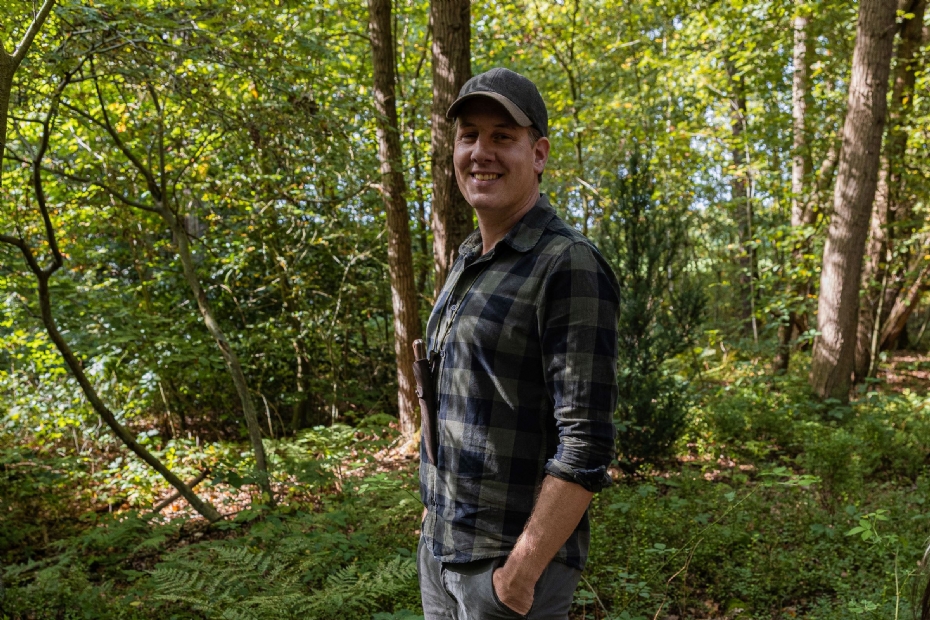 | | David van der Veen |
|
|
Accelerating sustainability and raising species protection to a higher level
Van der Veen: "We saw that bats and birds were doing poorly, mainly because roosting and nesting sites were disappearing. At the same time, the insulation sector was getting stuck due to legislation. That called for an integrated approach." From the province, he supported 26 municipalities in rolling out SMPs. "We were not the originators, but we were the driving force. More and more municipalities saw that this is the way to connect sustainability and nature protection."
|
|
"Ensure stable ecological knowledge in-house and keep communicating"
| |
|
Still pioneering
Since Van der Veen's move to the municipality of Zeist, he has experienced how policy works in practice. "We are still pioneering. You notice that every municipality has to search for the right people and capacity." According to him, the biggest challenges lie in smaller, often permit-free activities, such as dormers or maintenance by homeowners' associations. "There is still a lot to gain there. Not everyone knows how to work in a nature-friendly way."
Van der Veen also sees progress. "Our monitoring shows that bat populations remain stable. We have been working on compensation for five years and we focus on broad biodiversity recovery and thus on improving habitat quality: food, trees, insects." His main advice to other municipalities: "Ensure stable ecological knowledge in-house and draw up a biodiversity plan, just as we did in Zeist. An SMP is not a paper solution; it requires continuous explanation, cooperation and working together with project developers and companies. Only then does it really work."
 | | Marianne Wilschut |
|
|
Municipality of Wijk bij Duurstede: "limited capacity and high costs"
Smaller municipalities are now also working with SMPs. In Wijk bij Duurstede, the SMP fits within the municipality's broader sustainability policy, says policy adviser for nature and landscape Marianne Wilschut. "With the SMP, we make sustainability and housing construction easier and ensure that bats, house sparrows and common swifts benefit." The SMP provides better insight into the species present and often removes the need for time-consuming ecological surveys for projects. "For municipal projects, we do not have to carry out separate studies on, for example, bats every time. That saves time and money. But these benefits do come with obligations."
Initiators must always provide roosting or nesting sites for house sparrows, common swifts or bats, or take other nature measures such as planting a hedge or creating a green façade - even if no protected species are present. For large projects, demolition work sometimes has to be carried out in phases. "You have to take vulnerable periods into account, such as the breeding and maternity seasons. During demolition or insulation work, you are not allowed to disturb species."
|
|
"For municipal projects, we do not have to carry out separate studies every time, for example on bats, and that saves time and money"
| |
|
Implementation requires close cooperation with contractors and residents. "When permit applications come in, I assess whether the work may affect species. I then indicate that work may not take place during the breeding season and that a company specialised in nature-friendly renovation and insulation must be hired." Wilschut also sends work protocols with practical instructions. "For each type of activity there is a protocol. It explains how to prepare a building in a wildlife-friendly way for works and how to realise additional facilities for species."
For small municipalities, implementing an SMP is challenging, according to her. "You have limited capacity and monitoring costs are quite high. Fortunately, there is subsidy, and we make agreements with housing corporations to share the costs fairly." Still, she mainly sees advantages: "It provides insight, saves research costs and delivers nature gains."
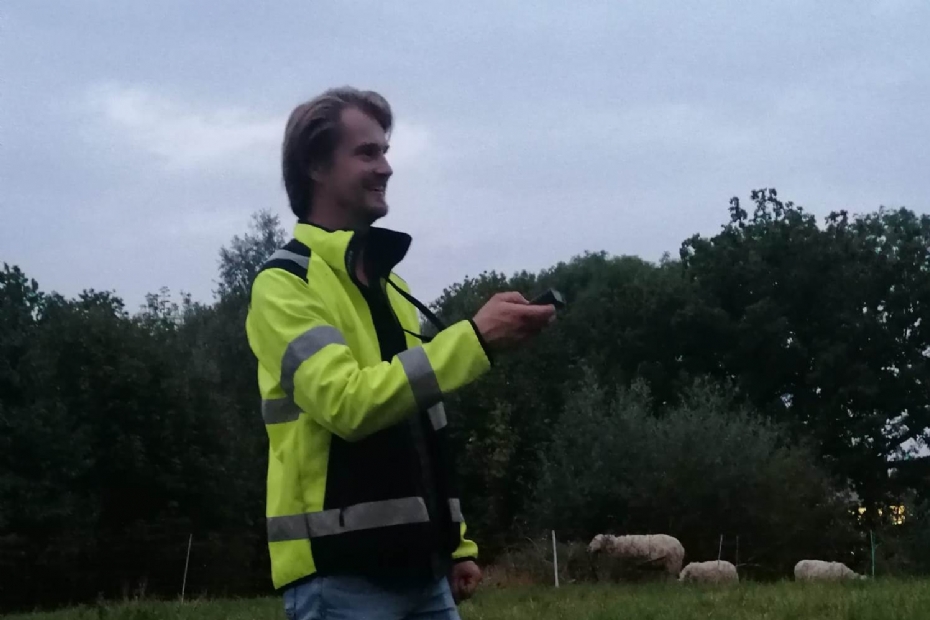 | | Friso Ockhuizen |
|
|
Municipality of Nieuwegein: "With an SMP, we finally speak one language"
While smaller municipalities mainly struggle with capacity and implementation power, Nieuwegein shows how cooperation and resident involvement can make the difference when working with species management plans.
In the municipality of Nieuwegein, the SMP was developed to bundle ecological research and accelerate the sustainability of homes. Urban ecologist Friso Ockhuizen explains: "Due to the insulation trend, we ran into the Environment and Planning Act. With an SMP, we can carry out activities such as insulation or roof renovations without having to repeat lengthy studies every time."
In 2024, the municipality carried out a baseline survey for bats, common swifts and house sparrows. "These are the building-dwelling species that often play a role in renovations. This gives us a good picture of what lives in the city and where bottlenecks are." The SMP relieves residents and housing corporations, he says. "It prevents delays and extra costs. Many standard activities can continue without new permit procedures."
Speaking the same language
According to Ockhuizen, an important effect is the cooperation between municipalities and consultancies. "We increasingly speak the same language. That may sound simple, but it is crucial. Everyone now means the same thing, from contractor to province. Municipalities help each other and learn from one another."
Nieuwegein actively involves residents. "We organise evening bat safaris so people can see why these animals need protection. Residents also install bat boxes on their own houses. That is contagious; others then want to join as well."
As a tip for other municipalities, Ockhuizen says: "Take your time and learn from others. Share knowledge, let people do what they are good at and do not try to reinvent the wheel."
|
|
"We increasingly speak the same language. That may sound simple, but it is crucial. Everyone now means the same thing, from contractor to province"
| |
|
Tailor-made solutions and cooperation
Both Wijk bij Duurstede and Nieuwegein see the species management plan as a practical way to combine nature and development. Where Wijk bij Duurstede mainly focuses on simplification within limited capacity, Nieuwegein uses its scale to further develop cooperation and participation. Both municipalities experience time savings, but also find that success depends on good coordination and clear agreements.
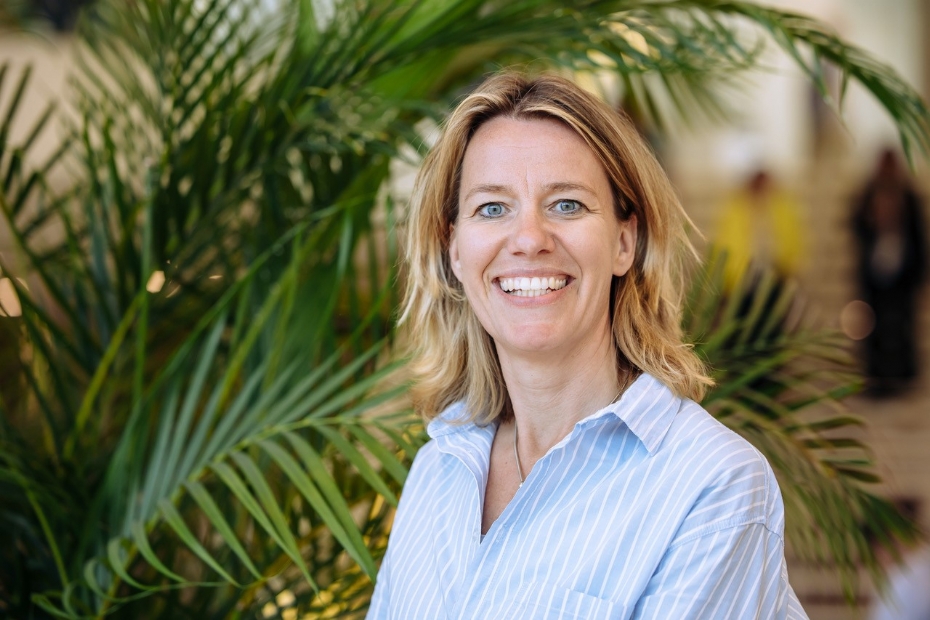 | | Serena Scholte |
|
|
Learning and innovating together
The province of Utrecht supports learning during the implementation phase by hiring Serena Scholte. She says: "I facilitate municipalities as a learning collective. We come together to exchange knowledge and work through complex issues, such as tendering monitoring. The online SMP cafés are very successful. Every three weeks we meet online for an hour, sometimes with a theme, such as a digital tool for SMPs or enforcement, sometimes as an open space where everything can be discussed. That really helps. We need to learn together and innovate together."
This article was previously published on 6 January 2026 on the website of Stad + Groen:
stad-en-groen.nl.
| Gemeente Wijk bij Duurste... | |
| |
| LOG IN
with your email address to respond.
|
|
|
| There are no comments yet. |
|
| |
Anyone can place small ads for free through their own account.
Place a free ad
|
|
|
|