VAT increase on plants and trees shelved for now, but concerns over 3,000 jobs remain |
|
|
|
|
 |
| 422 sec |
Green sector welcomes government decision but fears higher VAT could return and undermine greening efforts
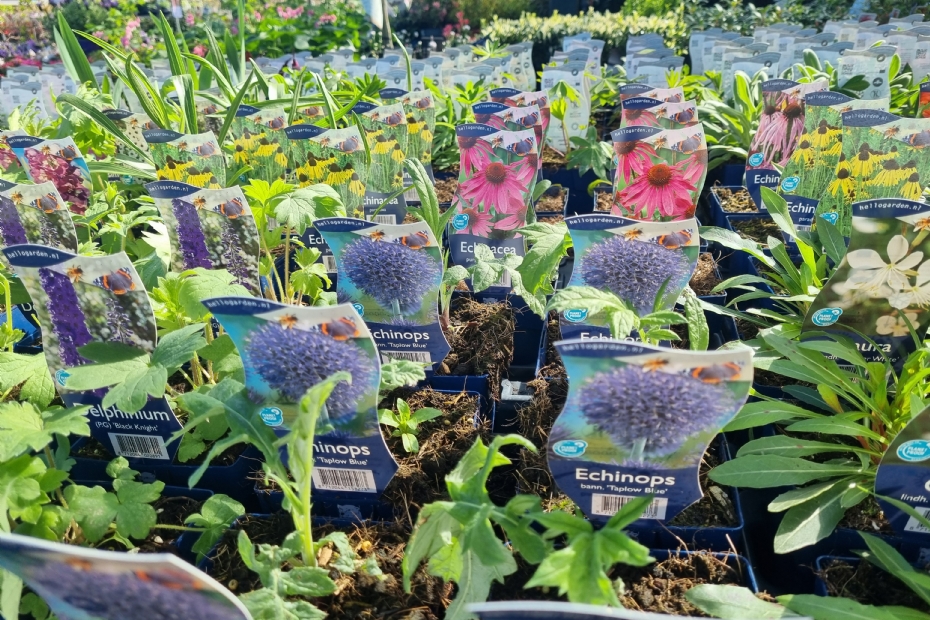
The Dutch government has shelved the planned VAT increase on flowers, plants, trees and flower bulbs for the time being. This means the proposed increase from 9 to 21 per cent in 2028 will not go ahead under current plans. However, the debate is far from over. Research suggests that the measure could cost the ornamental horticulture sector up to 830 million euros in turnover and almost 3,000 full-time jobs. Efforts to make towns and cities greener could also be affected. Trade associations, municipalities and businesses therefore hope the government will abandon the increase permanently.
 |
On Tuesday 3 November, Finance Minister Eelco Heinen announced that the VAT increase would be removed from the 2027 Tax Plan. The measure was originally due to take effect no earlier than 1 January 2028. Following discussions with several parties, including BBB, the government decided to shelve the increase for now. The decision has been deferred to the 2028 Tax Plan. The immediate threat has therefore been removed, but it remains uncertain whether a future government will revive the proposal.
Concerns within the green sector have not disappeared. According to research by Wageningen University & Research (WUR), the VAT increase would generate a maximum of 213 million euros in revenue, compared with an earlier budget estimate of 328 million euros. The government subsequently revised its estimate to 305 million euros. Calculations by research consultancy Decisio indicate a potential loss of turnover of between 674 and 830 million euros across the ornamental horticulture supply chain. In addition, between 2,280 and 2,820 full-time jobs could disappear. The consequences would not only affect growers and traders but could also extend to landscaping companies, green space contractors and their customers.
|
|
Research suggests the VAT increase would generate considerably less revenue than originally estimated
| |
|
Green ambitions, higher prices
For municipalities, the issue goes beyond potential economic damage. They face the challenge of making towns and cities more resilient to heat, drought and heavy rainfall. Trees, shrubs, perennials and other vegetation play an important role in this. At the same time, the EU Nature Restoration Regulation requires the preservation and expansion of urban green space and tree canopy cover.
This is precisely why the government's original proposal raised so many questions. Plants and trees would become more expensive at a time when municipalities are encouraging residents to introduce more greenery into their gardens. This could affect the design of residential neighbourhoods, the creation of green gardens and the connection between private gardens and public green spaces. The mayors of Alphen aan den Rijn, Aalsmeer, Westland, Horst aan de Maas, Katwijk, Nieuwkoop, Lansingerland, Peel en Maas and Venlo therefore sent a joint letter to the State Secretary for Finance and the Dutch House of Representatives. They called for the reduced VAT rate to be maintained.
What would this mean for public green spaces?
The financial situation for public green space projects differs from that of private gardens. Under certain conditions, municipalities can reclaim VAT on expenditure for public green spaces through the VAT Compensation Fund. Higher VAT would therefore not necessarily lead directly to higher net installation costs. The government also used this as an argument that the measure would not directly make municipal greening projects more expensive.
Nevertheless, the consequences for green infrastructure in towns and cities could extend further. Municipalities do not rely solely on their own parks, public planting areas and street trees to create a climate-resilient living environment. Private gardens, business premises and other green spaces outside municipal ownership also contribute. These are precisely the areas over which municipalities have less direct control. A paved front garden, for example, remains a source of heat even if the municipality makes the street outside greener. And a green street is not created by municipal trees alone, but also by hedges, green facades and planting in neighbouring gardens. If residents buy fewer plants and trees because of higher prices, this could make the wider greening challenge more difficult.
|
|
Municipalities can often recover VAT on public green spaces, but have less control over greening privately owned land
| |
|
How much value would greening subsidies lose?
Many municipalities offer subsidies to encourage residents to make their gardens greener. These may cover the removal of paving or the installation of planting. However, if trees and plants become more expensive because of a future VAT increase, the purchasing power of these subsidies will fall. Graszodenkopen.nl investigated what the VAT increase would mean for garden planting costs. For a planting bed covering 45 square metres, the additional costs would range from 69 to 178 euros, according to its calculations, if the increase were passed on in full.
This could absorb a substantial proportion of municipal greening subsidies. In Eindhoven, the subsidy examined amounts to 5 euros per square metre. For 45 square metres, that represents 225 euros. The additional VAT would therefore cancel out approximately 30 to 79 per cent of the subsidy. In Rotterdam, where the scheme examined provides 10 euros per square metre, the figure would be 15 to 40 per cent. These are illustrative calculations based on subsidy schemes in place in 2026. If VAT were increased, municipalities might achieve less greening with the same subsidy budget. Maintaining the same level of planting could require higher contributions.
 | | Marcel Lageman |
|
|
'You achieve exactly the opposite'
Marcel Lageman of Graszodenkopen.nl sees a particular contradiction in the government's original proposal. His company decided to investigate the consequences of the VAT increase because it had noticed that municipal greening initiatives were finally beginning to gain momentum. 'It took a while for removing paving from gardens to really catch on, but this year we noticed that more and more people were taking advantage of these schemes. Customers would ask us to send their invoice again because they needed it to apply for a subsidy. For some people, every euro counts.'
According to Lageman, the distinction between cut flowers and permanent greenery is important. 'With cut flowers, you might argue that they are a luxury product. But turf, trees and garden plants provide lasting greenery. They benefit not only their owners but also people living nearby.' He points out that green gardens contribute to the appearance and liveability of an entire neighbourhood. 'Of course we love grass, but if everyone only has a small lawn, that does not necessarily make the neighbourhood more attractive. It is the combination of hedges, trees and other planting that makes an area green. Everyone benefits from that, just as they benefit from public green spaces.'
Uncertainty affects long-term planning
Growers and suppliers face another problem: uncertainty about future demand. Although the VAT increase has been shelved for now, businesses do not know whether the proposal will return. Meanwhile, they still have to plan several years ahead. 'A landscaping contractor can generally reclaim VAT, but ultimately it is the private customer who pays the higher price,' Lageman explains. 'And if that means people buy less, we feel the impact too. You cannot simply adjust the production of turf or trees from one month to the next. You have to plan much further ahead.'
According to Lageman, municipal greening plans could also come under pressure. 'Municipalities prepare plans and budgets covering several years. If costs suddenly rise, some projects may no longer be financially viable. An entire project might then be cancelled, or considerably less greenery might be planted.'
This concerns not only municipal planting projects but also schemes in which municipalities, residents and other landowners invest together. Examples include greening residential neighbourhoods, business parks and heavily paved urban areas. If some participants withdraw because of higher costs, the entire project could be affected.
Greenery is already becoming more expensive
Suppliers are also facing rising costs. Lageman cites transport as an example. 'At one point this year, our transport prices were more than 30 per cent higher than the previous year. Higher diesel costs and road charging were among the factors involved. As a business owner, you cannot absorb every increase yourself. If a substantial VAT increase is added on top of that, plants and greenery will become even more expensive.'
He also fears that Dutch businesses could lose customers to suppliers across the border if VAT were increased. In Germany, a VAT rate of 7 per cent applies to comparable products. 'If our rate rises to 21 per cent, the difference becomes very large. We should not want people to start buying their plants abroad more often as a result.'
 | | Joris van Tol |
|
|
'Greenery is not a luxury but a necessity'
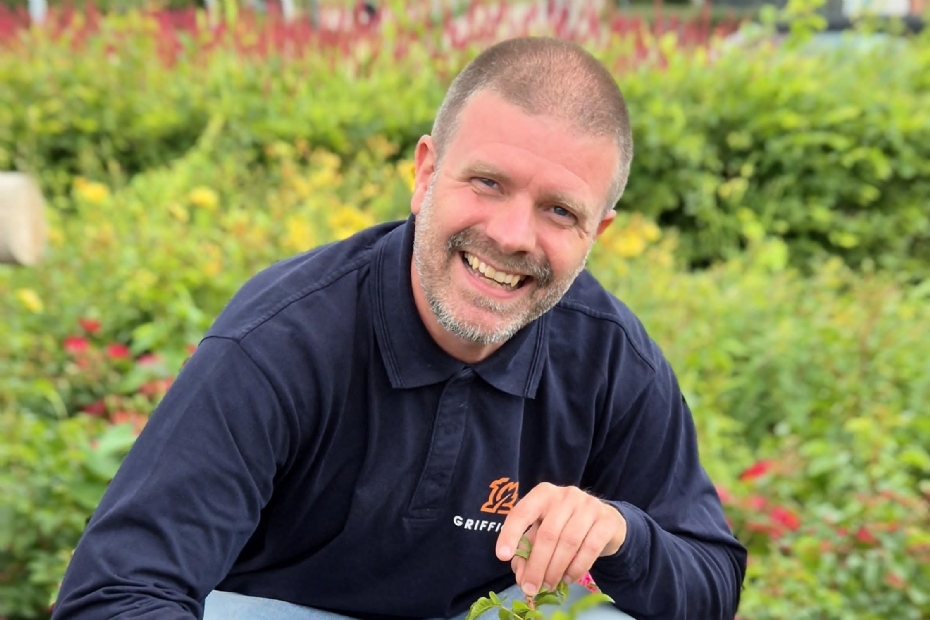
The government's proposal also attracted criticism from perennial plant grower Griffioen Wassenaar. Responding to earlier reports about the protest by the nine municipalities, Joris van Tol said: 'With the targets set by the EU Nature Restoration Regulation, we face a major greening challenge. The proposed VAT increase on garden plants does nothing to help. Now, more than ever, we should be encouraging planting and keeping greenery affordable, rather than making it more expensive. More greenery is not a luxury but a necessity.'
|
|
More greenery is not a luxury but a necessity - Joris van Tol, Griffioen Wassenaar
| |
|
'Not a better Netherlands, but a hotter one'
Opposition to the VAT increase was widespread across the green sector. At the end of October, eleven organisations, including LTO Nederland, Royal FloraHolland, Glastuinbouw Nederland, Tuinbranche Nederland and Koninklijke VHG, placed a full-page advertisement in the Dutch newspaper De Telegraaf. They referred to the coalition agreement entitled 'Getting to work: building a better Netherlands'. According to the organisations, the VAT increase would result not in a better Netherlands but a hotter one. They highlighted the role of greenery in reducing heat stress, absorbing rainwater and improving the living environment.
The government defended the measure partly by arguing that the reduced VAT rate was not a targeted or cost-effective way to encourage greening. It suggested that municipalities could make better use of targeted subsidies. The municipalities and trade associations involved argued that these subsidies would become less effective if buying plants and trees became more expensive.
 | | Marc Van Rosmalen |
|
|
Sector welcomes decision but remains concerned
On 3 November, the same day the government announced that it was shelving the VAT increase, the green sector staged a protest at the Dutch House of Representatives in The Hague. Koninklijke VHG and other trade associations jointly handed out forget-me-not flowers to members of parliament and government officials. Their aim was to remind politicians of their own green ambitions and the importance of affordable greenery.
Koninklijke VHG welcomed the decision but hopes above all that the measure will be abandoned permanently. VHG director Marc Van Rosmalen said: 'We will continue to campaign to retain the current VAT rate. Making the Netherlands greener while making greenery more expensive simply does not make sense. With the changing climate, we need more greenery, not less. Trees, shrubs and plants provide cooling, help retain water and contribute to biodiversity. When people think of ornamental horticulture, they may mainly think of cut flowers, but a VAT increase would also affect the trees and plants that private individuals use to make their gardens greener. You would be making these more expensive at a time when we should be encouraging people to plant more greenery. Affordable greenery is essential if the Netherlands is to achieve its green ambitions. That is why this VAT increase must be taken off the table permanently.'
Tuinbranche Nederland also welcomed the decision but expects the VAT debate could return in 2027. Director Frank van der Heide therefore described it as 'a postponement rather than a cancellation'.
Shelved for now, but the debate continues
Following the decision on 3 November, the VAT rate on flowers, plants, trees and flower bulbs will remain at 9 per cent for the time being. The increase is no longer part of the 2027 Tax Plan and, under current plans, will not take effect on 1 January 2028. Whether the government will propose the measure again will become clear during preparations for the 2028 Tax Plan.
The projected economic consequences and concerns about greening are therefore hypothetical for now, but they remain relevant. The debate raises a broader question: how can residents be encouraged to make their gardens greener without making trees and plants more expensive? Lageman previously described the contradiction as follows: 'On the one hand, you provide subsidies to encourage people to make their gardens greener. On the other, you make that same greening more expensive. You are essentially just moving money around. And the question is whether you ultimately achieve what you set out to do.'
This article was previously published on 9 November 2026 on the website of Stad + Groen.
| Wageningen University and... | |
| Gemeente Alphen aan den R... | |
| Gemeente Horst aan de Maa... | |
| |
| LOG IN
with your email address to respond.
|
|
|
| There are no comments yet. |
|
| |
Anyone can place small ads for free through their own account.
Place a free ad
|
|
|
|


