Modiform develops circular transport solutions and helps growers prepare for new European packaging regulations |
|
|
|
|
 |
| 190 sec |
'We want to take as much of the burden off growers as possible'
How can sustainability be made practical for growers? Modiform is looking for answers through smart transport solutions, raw material recycling and collaboration across the supply chain. A new reusable transport tray with a cardboard insert and support with European packaging legislation are concrete examples. Désirée de la Fuente-van Baal, Director Sustainable Development, explains how Modiform's three core values - Leading the way, Connected and Craftsmanship - guide its sustainability strategy.
| Modiform has more than 45 years of experience with recycled trays |
'Modiform was already working on recycling around 1980, when it was still relatively unknown,' says De la Fuente. 'We also contributed to the development of the Normpack tray, which has since become a standard in plant trays. In addition, we were the first on the market to introduce trays without added colourants: the Pristine tray range. More companies are now following that example.'
The latest development is a reusable transport tray with a cardboard insert that can be die-cut to any required shape. The challenge is to combine reuse with efficiency at the nursery and during transport. 'We need to ensure that growers can market their products efficiently. That is why we do not want to compromise on ease of use or logistics with this new tray.'
Standardisation is important in this process. The sector uses many different transport trays, designed for a wide range of plants and growing methods. At the same time, trays need to stack efficiently and take up as little storage space as possible. 'We are currently testing whether the tray meets both our own requirements and the requirements for reuse. But a good product alone is not enough. We are also developing a suitable return system together with other parties in the supply chain.'
More details about the market launch will be presented at IPM in January 2027.
|
|
'We need to ensure that growers can market their products efficiently, so we will not compromise on the ease of use or logistics of the new transport tray'
| |
|
Connected across the supply chain
The second core value is Connected. As a family business, Modiform places great importance on long-term relationships with customers and suppliers. According to De la Fuente, this collaboration is essential for making further progress on sustainability. 'We are part of a supply chain in which growers, suppliers and customers depend on one another. Growers have expertise in plant cultivation, while we have expertise in materials and product development.'
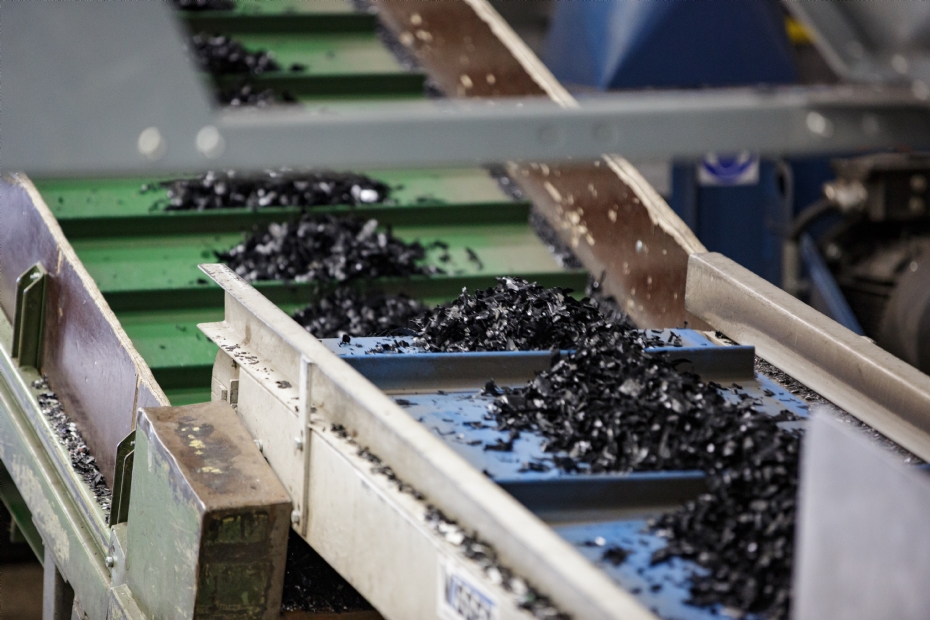 | | Processing recycled plastic requires specialist knowledge |
|
|
Modiform also uses this expertise to extend the life cycle of its trays. The company encourages customers to return used trays through a return system, for which they receive compensation. The collected polystyrene (PS) is processed into raw material for new products. 'We want to close the material loop as much as possible. However, some growers still do not return their used trays. This means valuable material is lost that could otherwise be reused.'
Craftsmanship delivers practical solutions
Processing recycled plastic requires specialist knowledge. The quality and origin of the material can vary, while the finished product must meet consistent standards. 'Making a tray from recycled material is more complex than working with virgin plastic. You need to understand how the material behaves during production.'
To achieve this, Modiform combines expertise in raw materials, manufacturing and product design. Its in-house R&D department translates growers' needs into practical solutions, supported by its own product designer and mould designer. 'We understand what happens at the nursery. With more than 45 years of experience in the sector, we have become a genuine centre of expertise. We use that knowledge to develop products that meet practical needs.'
European packaging regulations accelerate the transition
The European Packaging and Packaging Waste Regulation (PPWR) also requires action. The regulation aims to reduce packaging waste, encourage reuse and improve the recyclability of packaging. The European targets for 2030 make the coming years particularly important for packaging manufacturers and users.
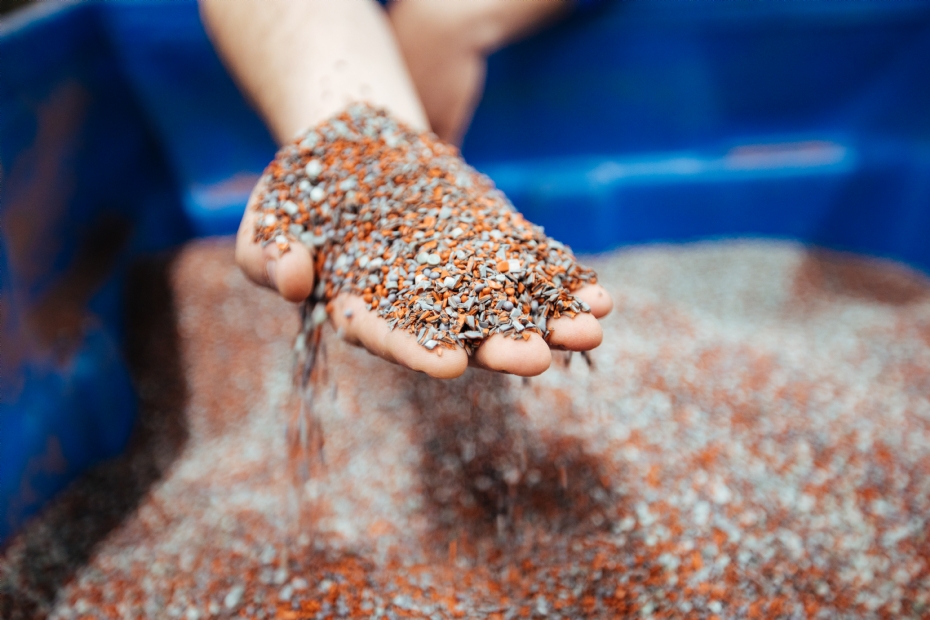 | | The origin of raw materials is an important factor |
|
|
For Modiform, this means that reusable transport solutions and closed material loops are becoming increasingly important. The R-ladder provides a useful framework, with strategies such as using less material (Reduce), reusing products (Reuse), recycling materials (Recycle) and reconsidering product and material choices (Rethink). 'You need materials to make products. The question is how to prevent those materials from becoming waste,' says De la Fuente. 'That is why we look not only at recycling, but also at reducing material use, reuse and alternative raw materials.'
For example, Modiform is working with Wageningen University & Research (WUR) to explore the potential of bio-based and biodegradable raw materials.
Supporting growers with knowledge and documentation
The new regulations raise questions among growers about the requirements that packaging such as trays must meet and what information they need to provide. Modiform wants to support them with both product solutions and the necessary documentation. 'It is not just about the tray itself. You also need to be able to document which materials you use and what happens to those materials. Growers partly depend on information from their suppliers for this. We want to take as much of this burden off growers as possible.'
The origin of raw materials also plays a role. Most of the material Modiform uses comes from the Netherlands, with the remainder mainly sourced from neighbouring countries. This limits transport distances and helps maintain a manageable supply of raw materials.
 | | Désirée de la Fuente-van Baal, Director Sustainable Development |
|
|
The new reusable transport tray brings together the different elements of the circular strategy: efficient transport, reuse and collaboration across the supply chain. Its development therefore fits into the broader ambition to provide growers not only with sustainable products, but also with support in adapting to the changes facing the sector.
'Ultimately, it comes down to a good product, an efficient system and collaboration,' concludes De la Fuente.
This article was previously published on 24 November 2026 on the Boom In Business website.
| Wageningen University and... | |
| |
| LOG IN
with your email address to respond.
|
|
|
| There are no comments yet. |
|
| |
Anyone can place small ads for free through their own account.
Place a free ad
|
|
|
|





