How are the trees that received no water doing? |
|
|
|
|
 |
| 193 sec |
Heat and drought expose the vulnerability of the tree population
How are the trees that received no water this summer doing? Several municipalities lost young plantings, while mature trees also suffered considerably. According to tree consultant Roel Vermeulen, it is time for green space managers to make different choices: 'Better one large, healthy tree than two small, weak trees.'
| Edwin van der Burg of the municipality of Vlaardingen on the dry summer: 'A lot of planting was carried out as part of the Dutch national paving removal competition (NK Tegelwippen). The chances of any of it having survived are very slim' |
According to the Royal Netherlands Meteorological Institute (KNMI), the summer of 2026 was the hottest since records began and was also exceptionally dry. One water authority after another imposed water abstraction bans, prompting several municipalities to stop watering planting beds and trees. The consequences were visible in Westland and Vlaardingen, among other places, where many young plantings were lost after the Delfland Water Authority imposed a watering ban. Until then, Westland had been watering extensively to keep newly planted shrubs alive. 'You can certainly consider the new plantings a write-off,' says Leon van der Lugt, the municipality's green space management coordinator.
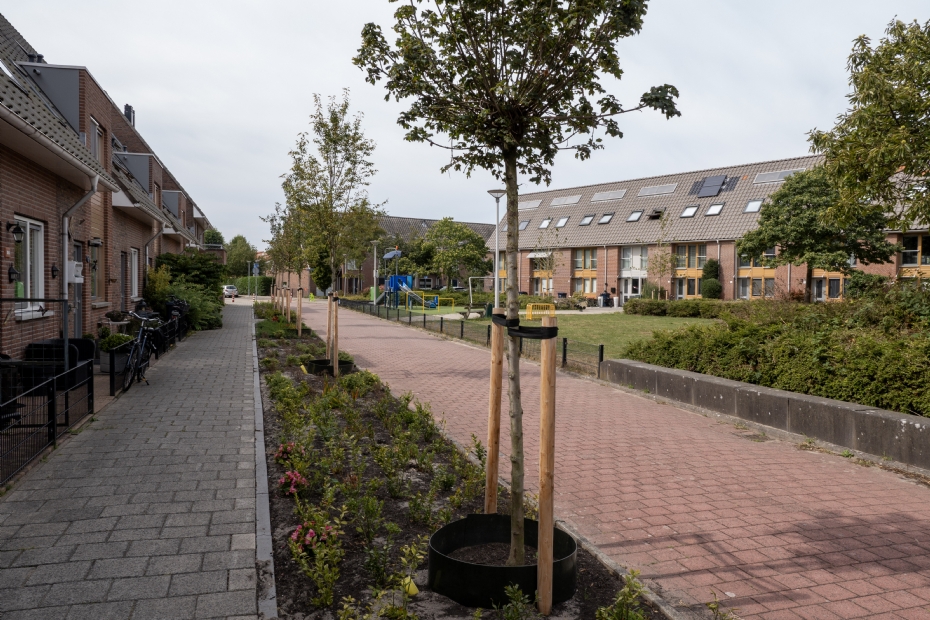 | | Leon van der Lugt of the municipality of Westland: 'You can certainly consider the new plantings a write-off.' Photo: Rolf van Koppen Fotografie. |
|
|
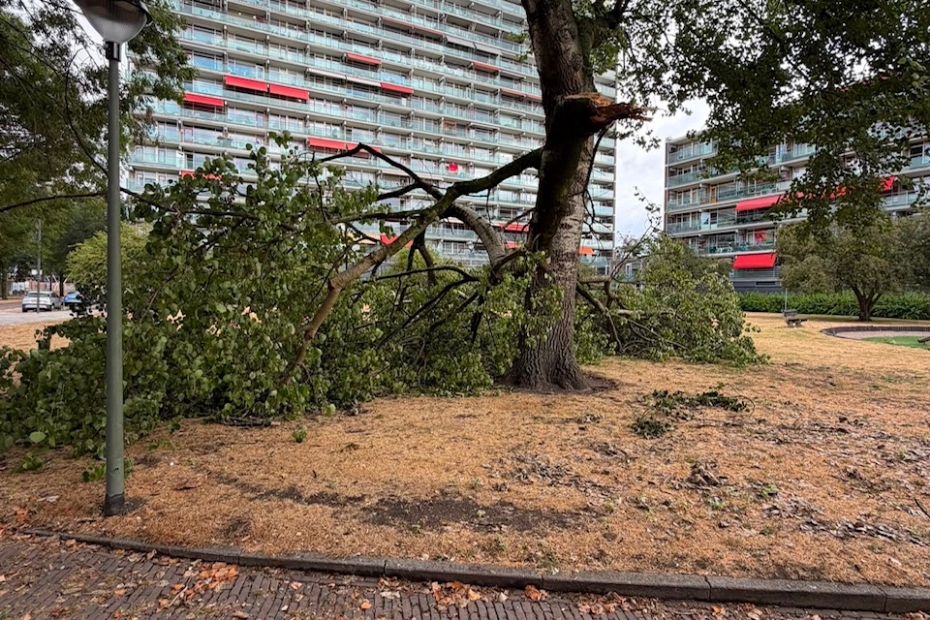 | | In Vlaardingen, a white poplar shed its branches due to drought. Its brittle wood is particularly vulnerable, and this eventually led to several emergency tree removals. |
|
|
The damage in Vlaardingen is also extensive. Young trees, with their limited root systems, proved particularly vulnerable. Among other initiatives, the municipality had planted trees and other vegetation as part of the Dutch national paving removal competition (NK Tegelwippen). 'The chances of any of it having survived are very slim,' says municipal green space officer Edwin van der Burg.
|
|
'In the past, we simply planted new trees because watering was more expensive than planting. You can no longer get away with that'
| |
|
The drought is forcing municipalities to reconsider the costs of planting and maintenance. Vlaardingen waters more frequently whenever possible and prunes trees to reduce water loss through transpiration. 'In the past, we simply planted new trees because watering was more expensive than planting. You can no longer get away with that,' says Van der Burg. Vermeulen believes the watering ban is difficult to justify, particularly for young plantings. 'It is essentially a waste of investment. Make sure young trees establish themselves properly. They will then need less watering later on.'
Mature trees are disappearing too
However, the problems are not limited to young plantings. Vermeulen is also seeing mature trees decline, particularly on sandy soils. 'I have another one now that I am going to declare unsafe. In 15 years, we will no longer have mature beech trees on sandy soils. Things are moving very quickly now.' Peter van Laarhoven, tree specialist at the municipality of Dongen in the Dutch province of North Brabant, recognises this situation. 'We are on sandy soil. Birch, beech and alder trees that have been growing here for around ten years are really struggling.'
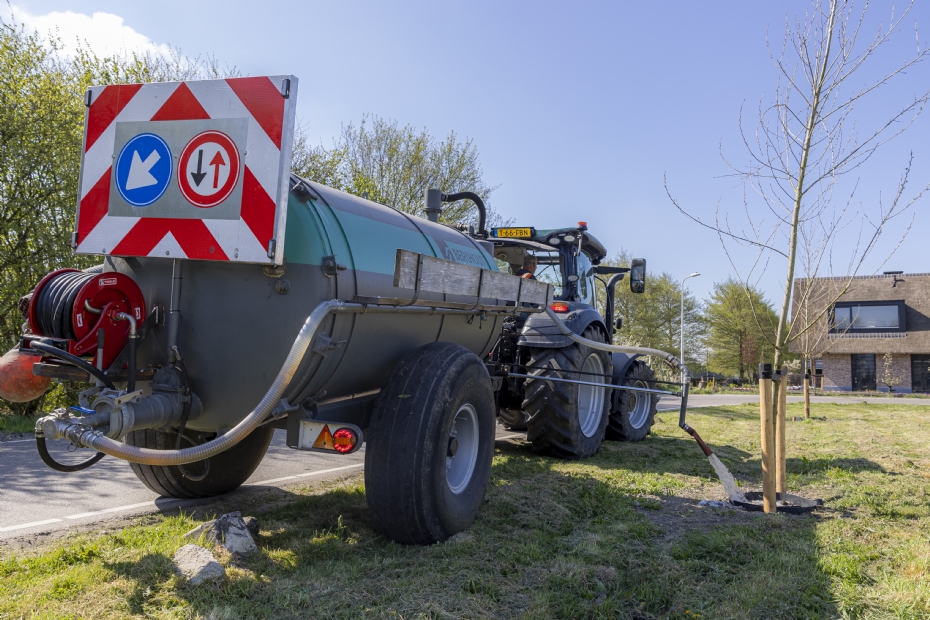 | | The municipality of Westland also faced a watering ban. Photo: Rolf van Koppen Fotografie |
|
|
The decline of mature trees is not always apparent to residents. They see new trees being planted but do not notice that older trees are losing their vitality at the same time. 'As a result, residents are often unaware of what is happening. But I cannot imagine our cities becoming greener this way,' says Vermeulen.
Invisible decline
Jan Willem de Groot, director of arboricultural consultancy Terra Nostra, warns that the effects of drought are not always immediately visible. 'They may survive that one period, but what happens afterwards?' During prolonged heat, trees build up fewer energy reserves, reducing their ability to recover from subsequent periods of drought. According to De Groot, this calls for a different approach. 'If you only intervene once a tree starts showing signs of poor growth, you are too late.' At the same time, municipalities are struggling with the question of how much water they should be allowed to use to save young plantings. Van der Lugt, for example, believes that using tap water for this purpose is inappropriate. 'It is not prohibited, but it sends the wrong message.'
Balancing diversity and drought resistance
The experiences of the past summer are influencing the selection of new trees. In Westland, beech trees are already being avoided in vulnerable locations, while Van der Burg is considering trees with smaller leaves, among other options, to reduce water loss through transpiration. Species selection has also been discussed in the municipality of Dongen. 'We are currently making extensive preparations to plant alternative tree species,' says Van Laarhoven.
However, Van der Burg wants to prevent the city's tree population from becoming dominated by a limited number of drought-resistant species. 'You also want to maintain diversity and ecological value.' Moreover, drought resistance is not the only criterion, he says: species that tolerate heat well may be vulnerable to prolonged wet conditions or severe frost.
Making room for trees
According to Vermeulen, too little attention is still being paid to growing conditions. In many locations, soils are compacted and have been severely disturbed by underground works. He sees too little change in the way municipalities and nature conservation organisations plant trees, even though warnings were already issued following the hot summer of 2018.
|
|
'A birch tree around 60 years old survived the drought well'
| |
|
Dongen demonstrates the benefits of improving tree growing conditions. 'This is particularly important on sandy soils, where water drains away quickly. Organic matter helps retain moisture and promotes capillary action,' says Van Laarhoven. The municipality experienced few tree losses this summer, including among older trees. 'A birch tree around 60 years old had slightly thinner foliage but survived the drought well. Improving growing conditions is well worth the investment.'
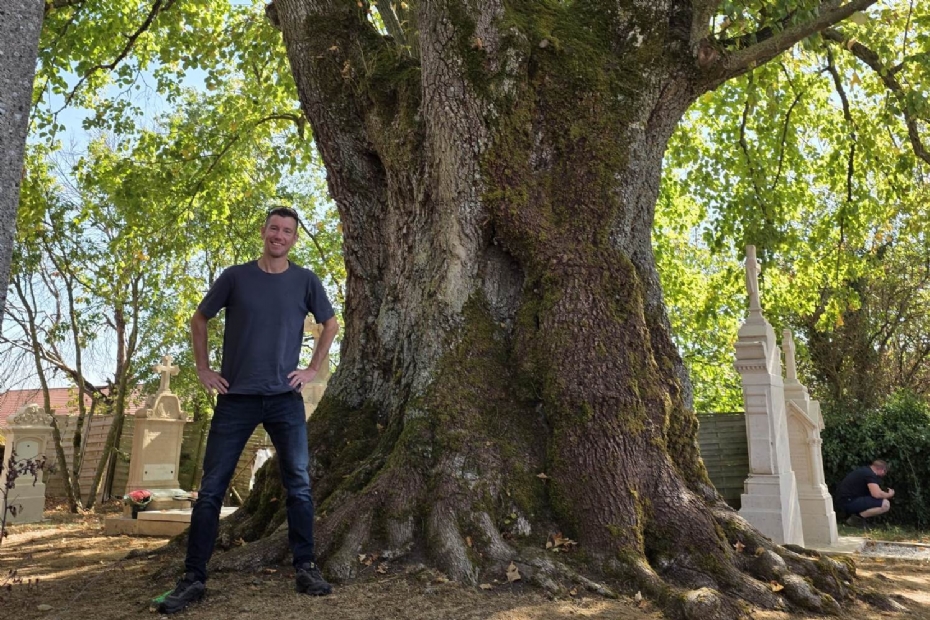 | | Roel Vermeulen: 'The time for seeking compromises is over' |
|
|
Improving tree growing conditions also requires a different approach to the design of public spaces, Vermeulen concludes. This means fewer parking spaces, relocating underground cables and pipes, and giving trees the space they actually need. Planting more trees makes little sense if they are not given the opportunity to reach maturity in good health. 'The time for seeking compromises is over,' he says. 'We really need to make choices. Better one large, healthy tree than two small, weak trees.'
This article was originally published on 23 November 2026 on the Boomzorg website.
| Hoogheemraadschap van Del... | |
| |
| LOG IN
with your email address to respond.
|
|
|
| There are no comments yet. |
|
| |
Anyone can place small ads for free through their own account.
Place a free ad
|
|
|
|





